
Design
Product Design

Octopii Social — A Rescue Mission
New video incoming! In the meantime I encourage you to give Octopii Social a download. I put immense effort into polishing every nook and cranny of Octopii Social — it’s deceptively simple, yet the most advanced social platform ever designed. There’s still a few polish items here and there but I always stand by my work, go ahead — give it a download!
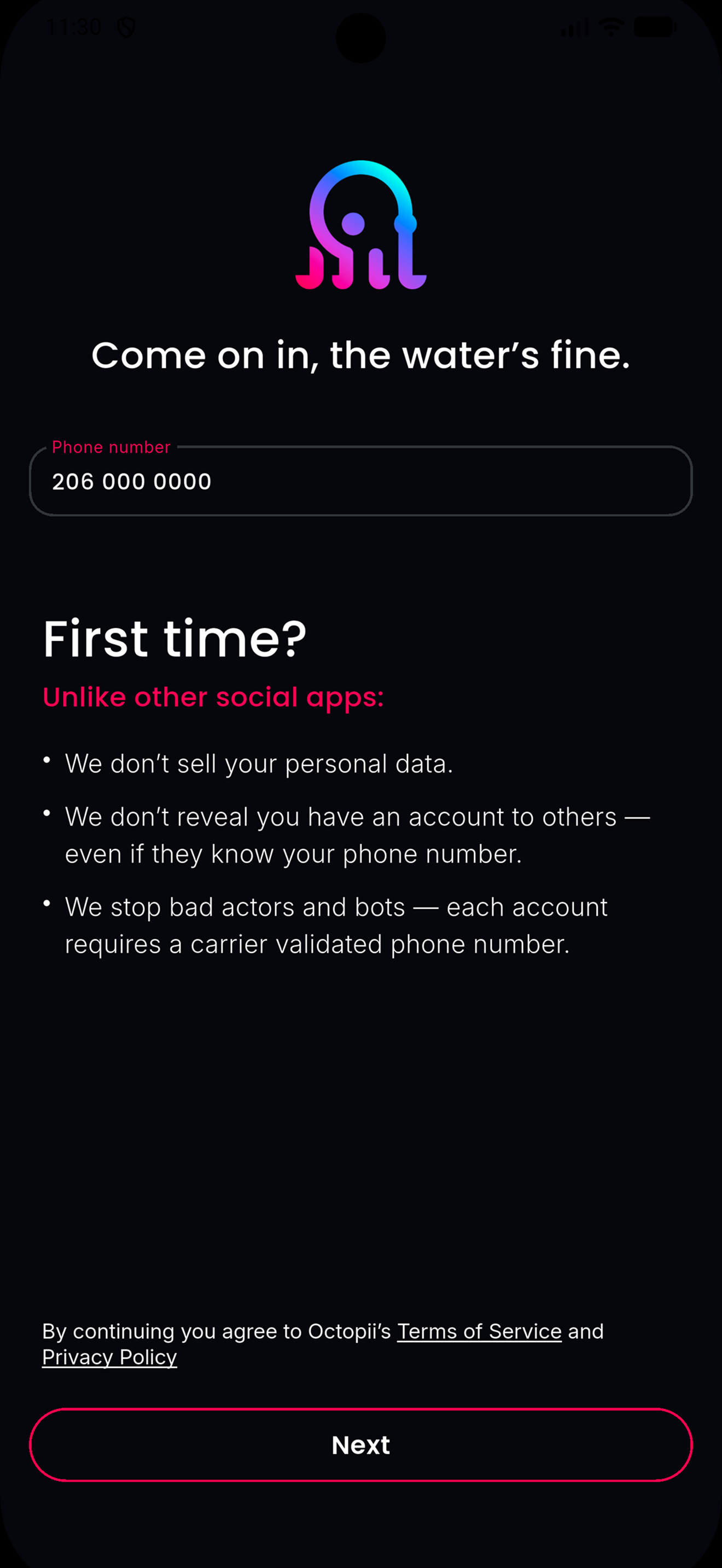
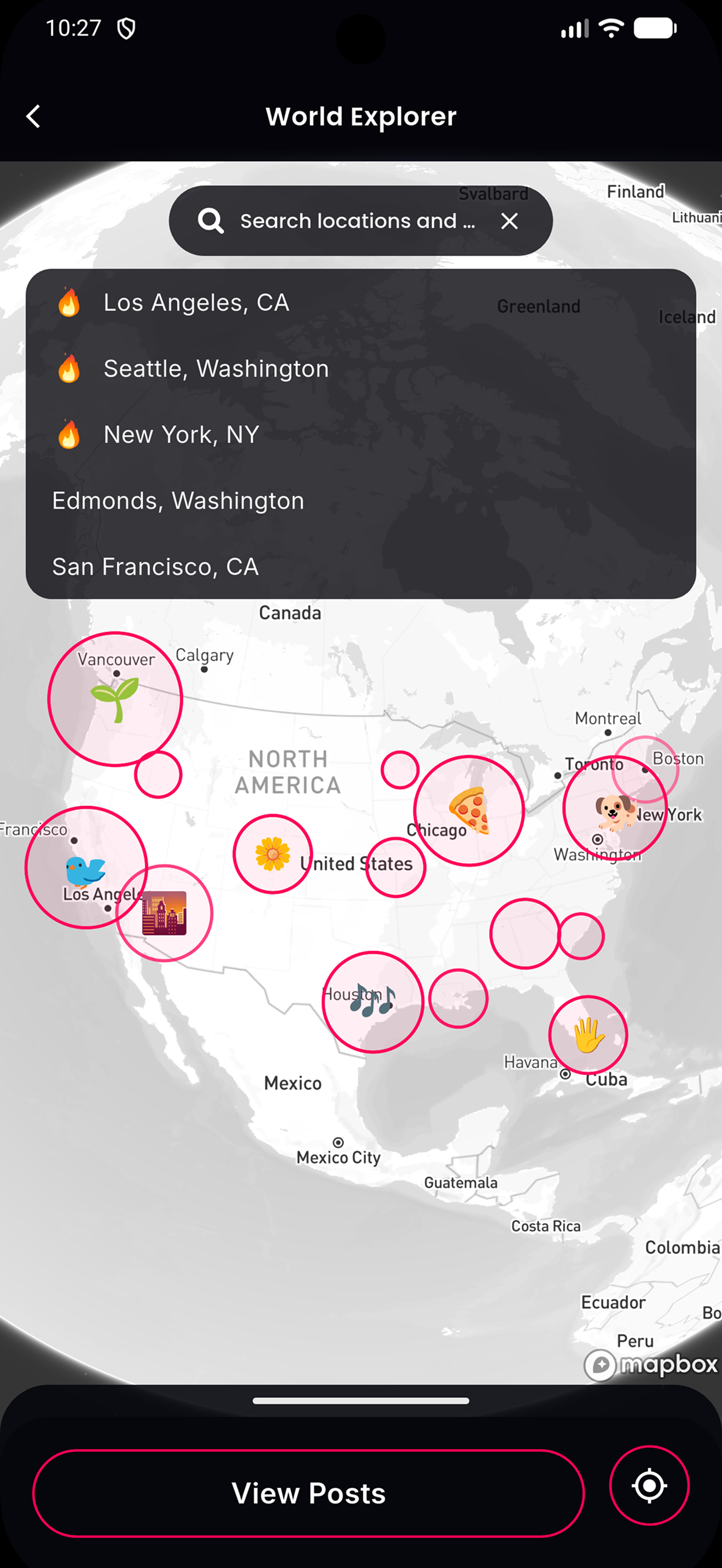
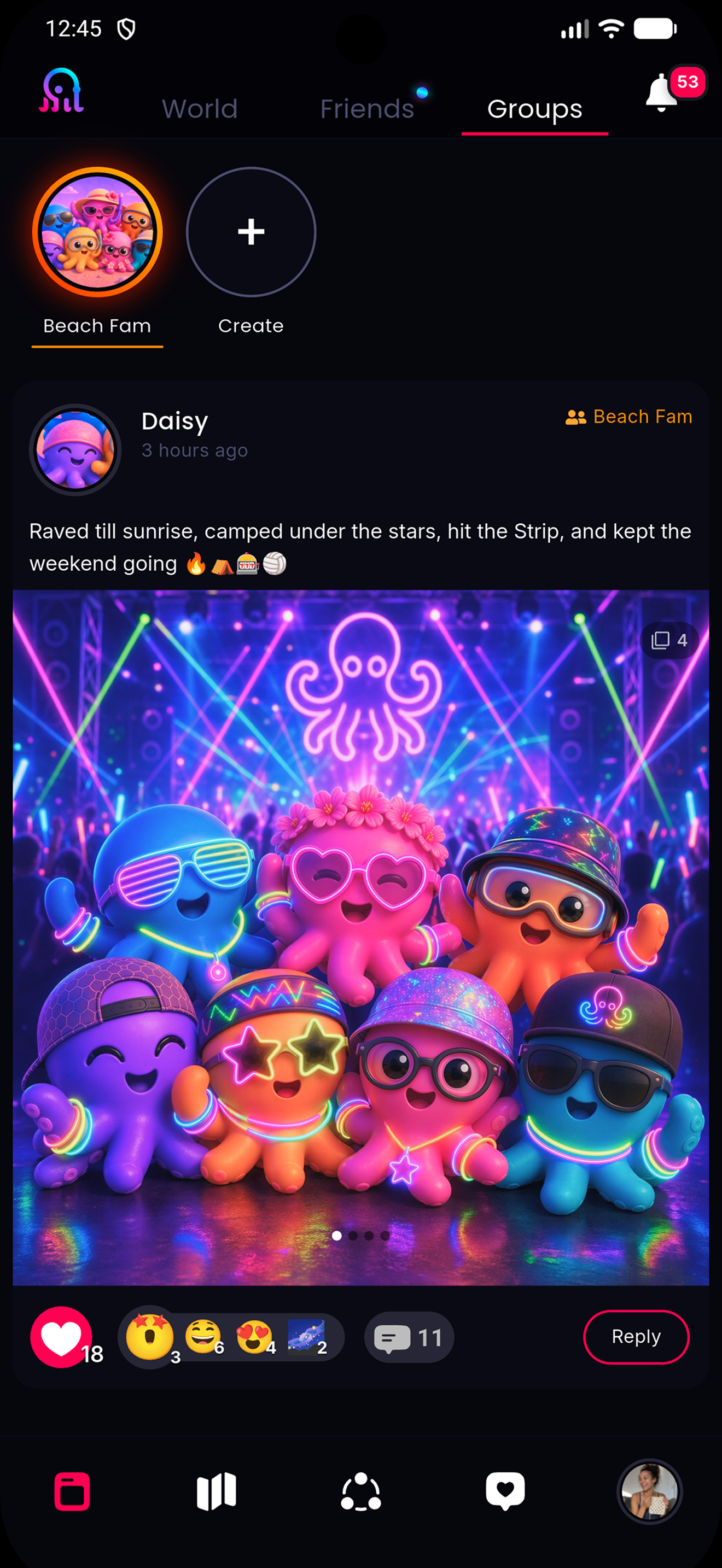
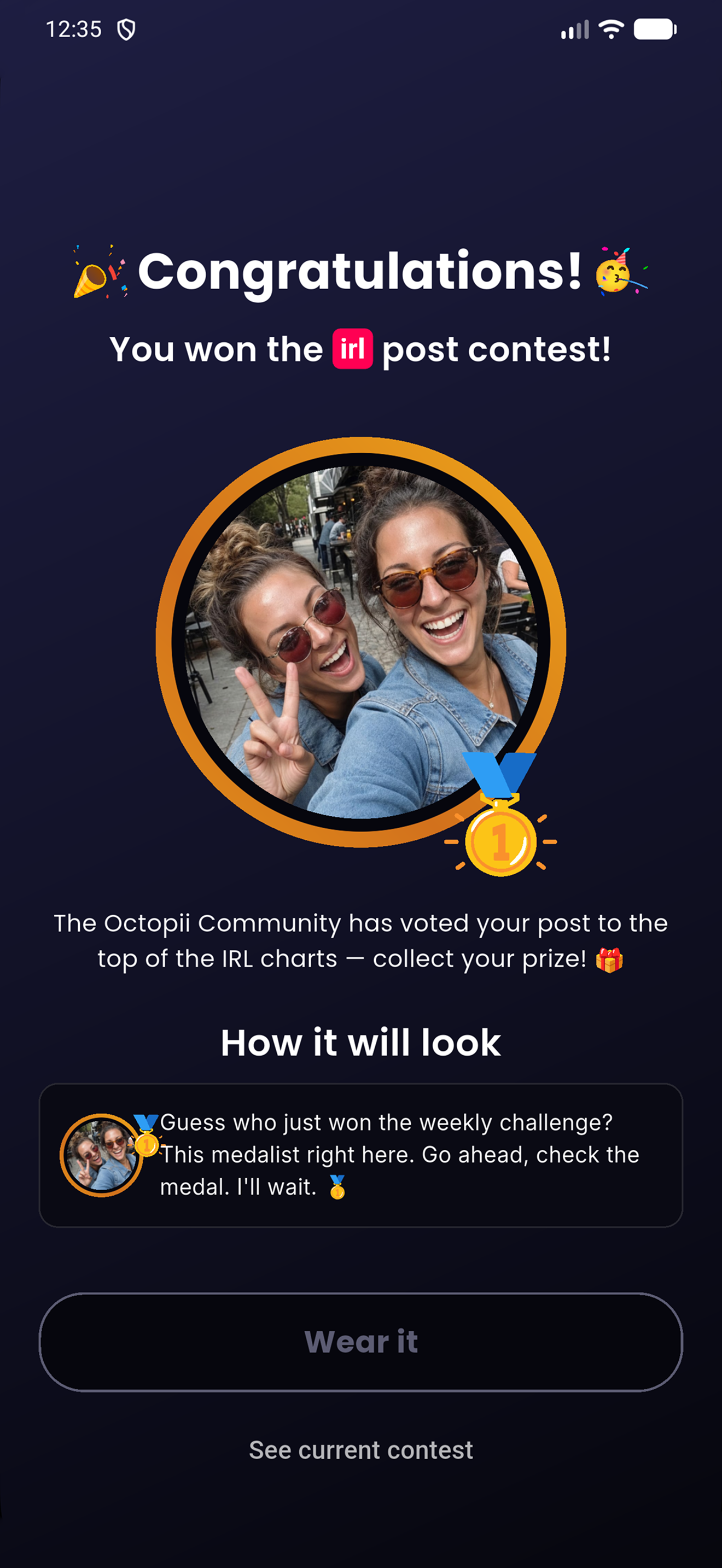
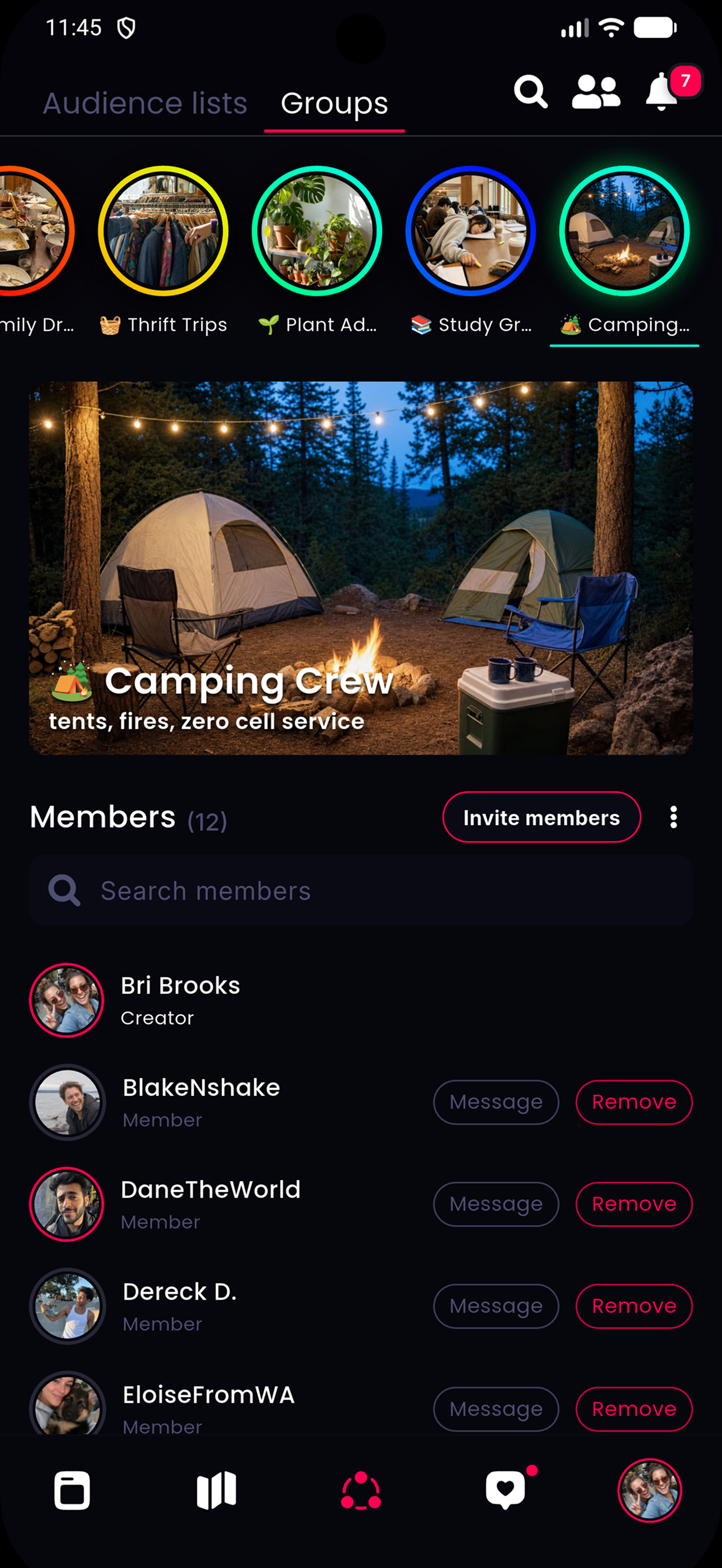
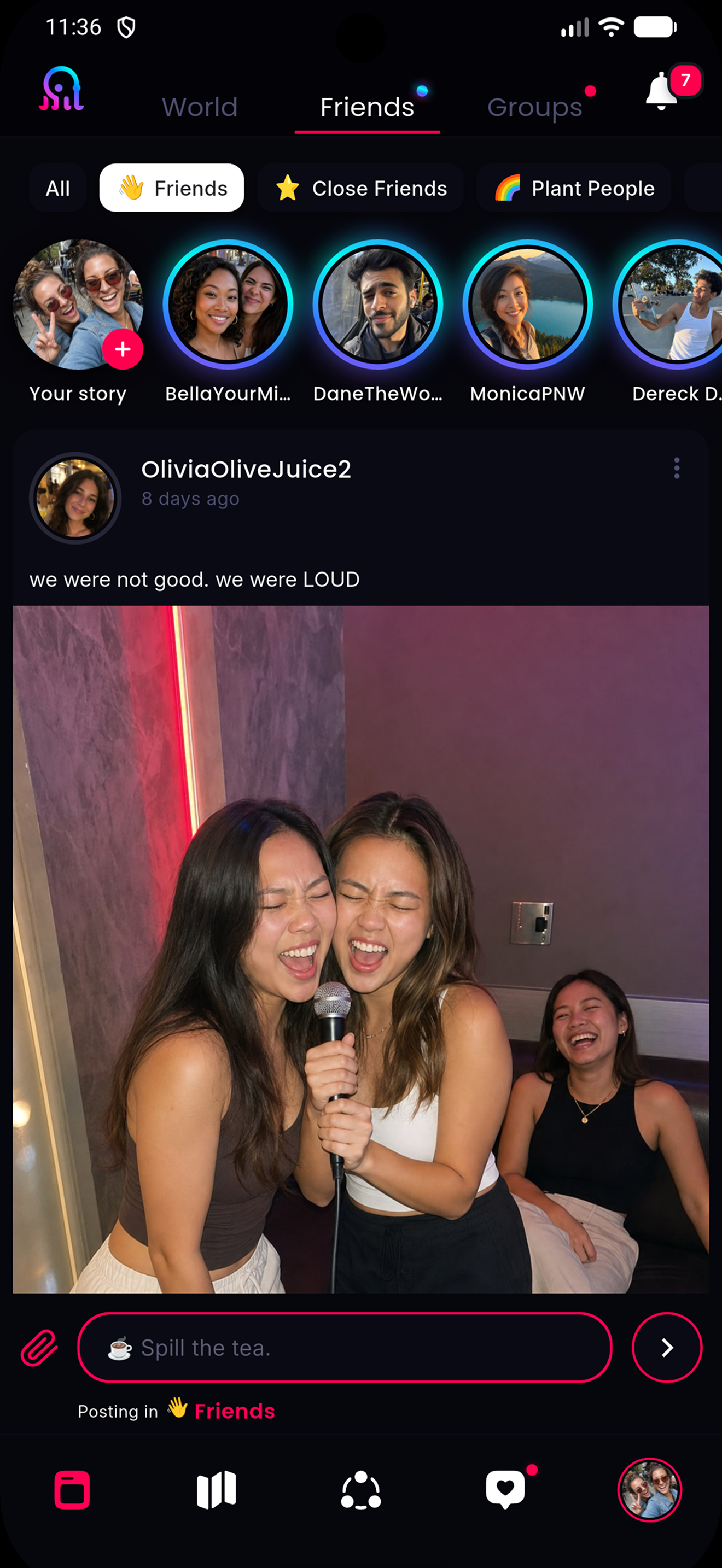
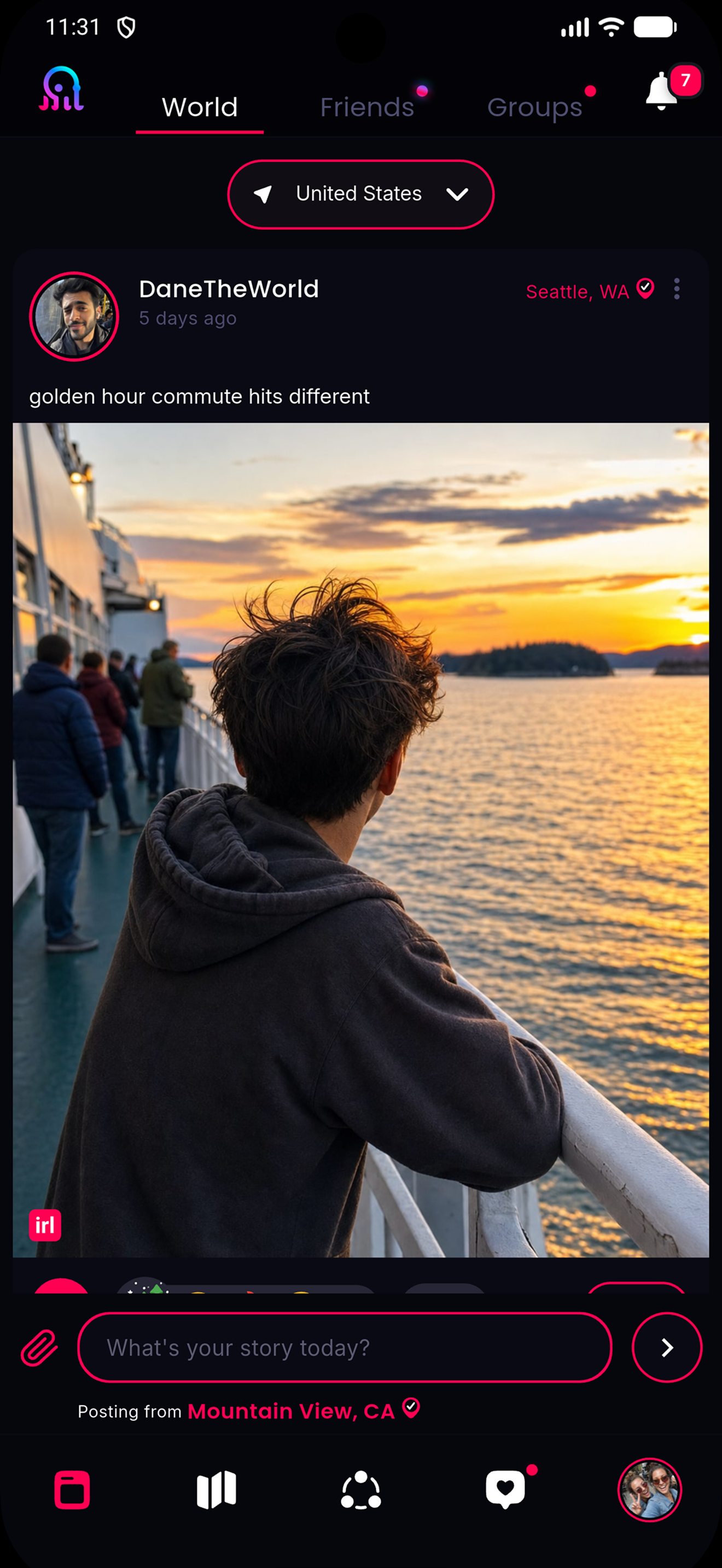
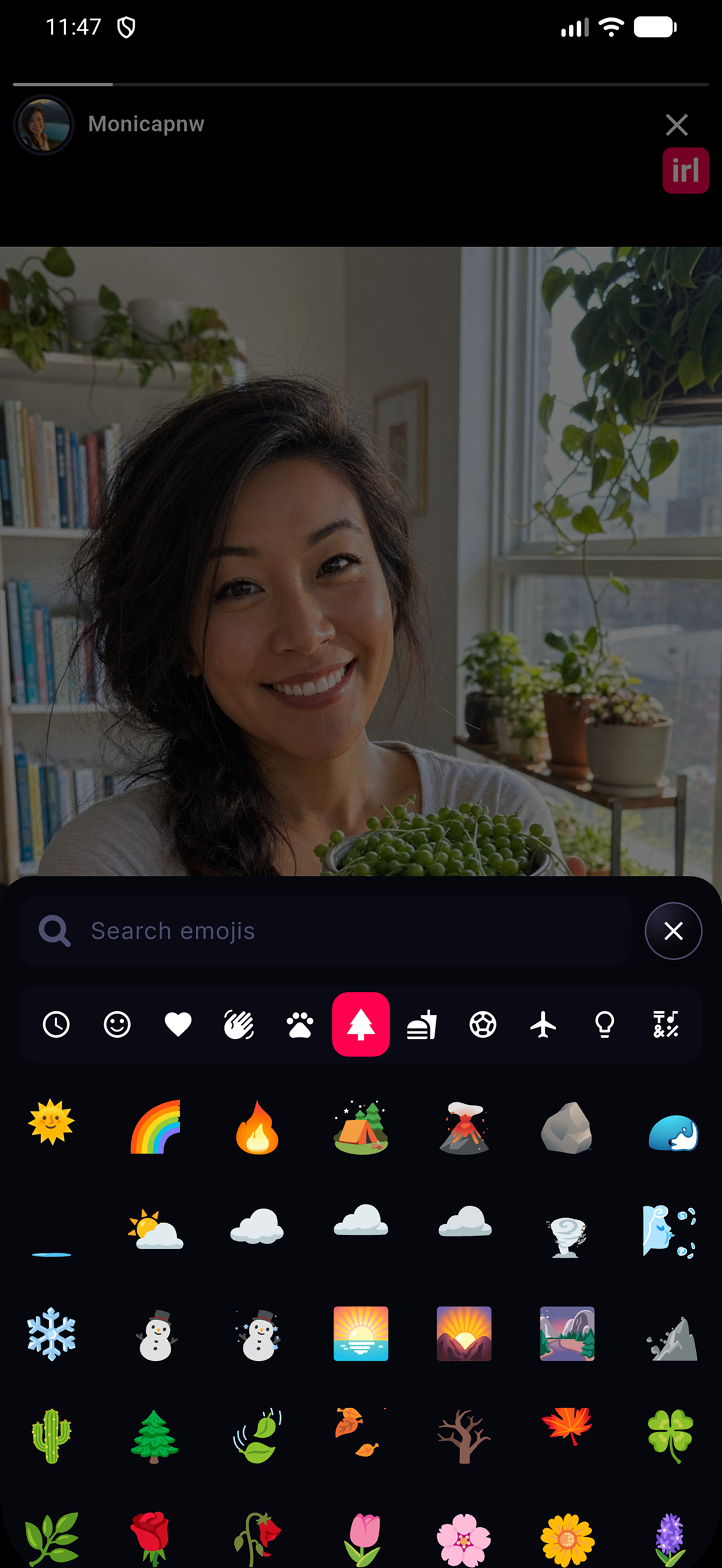
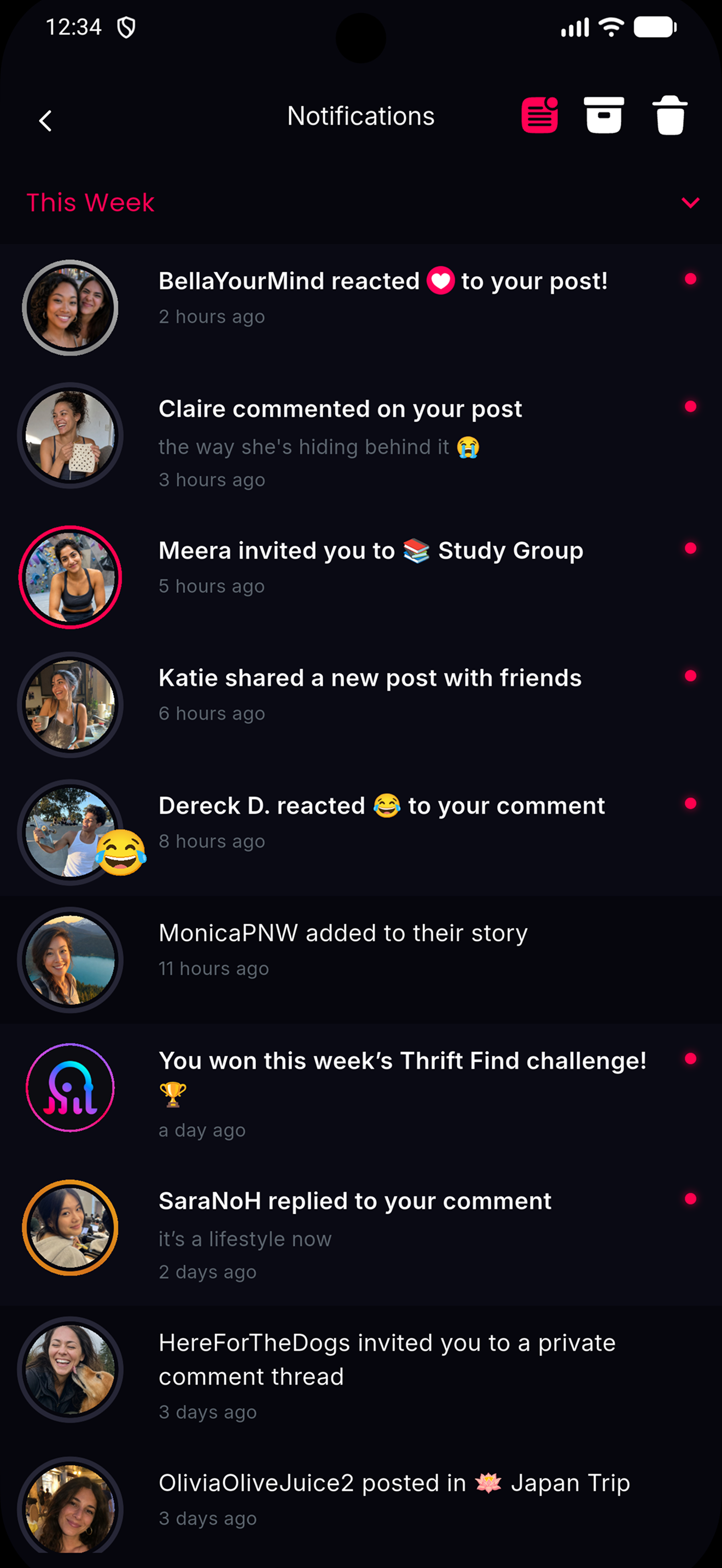
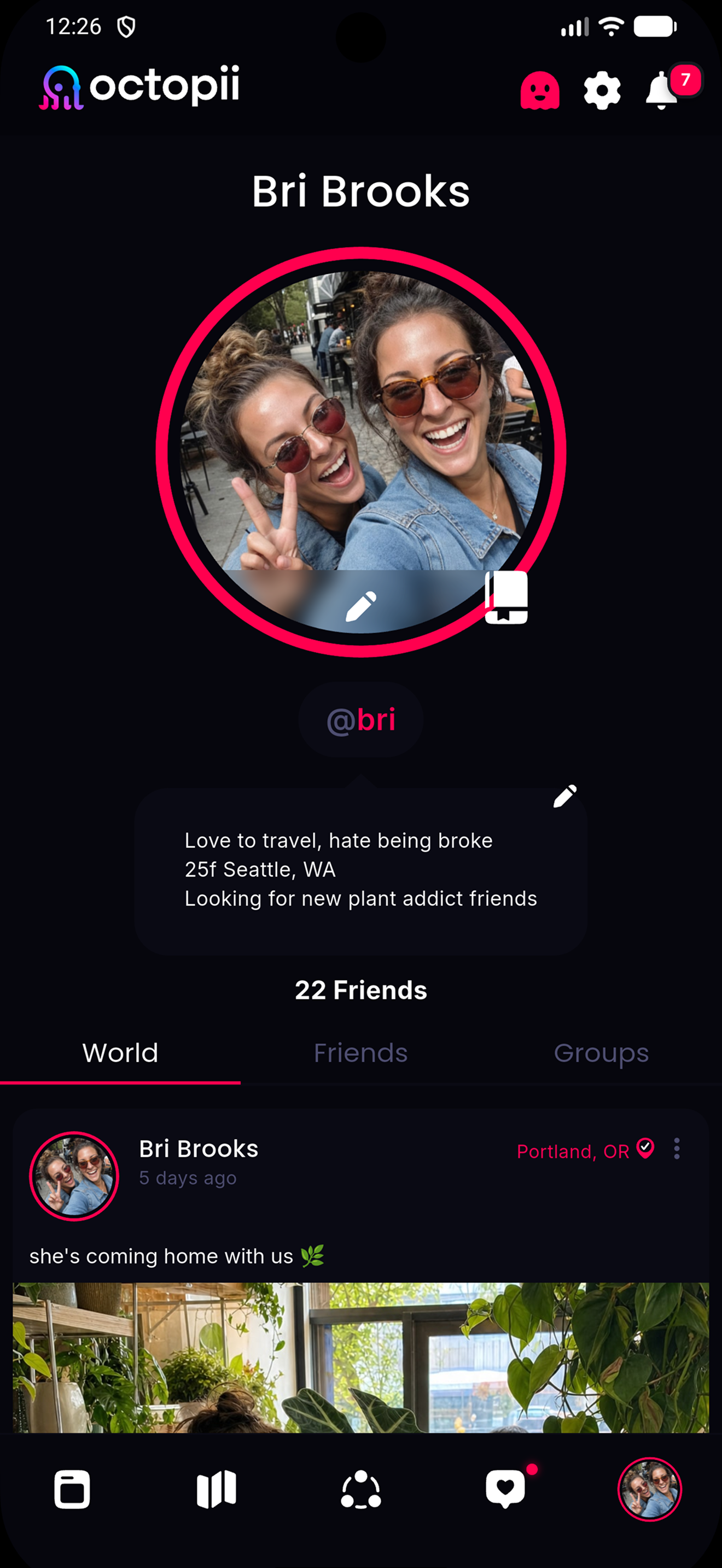
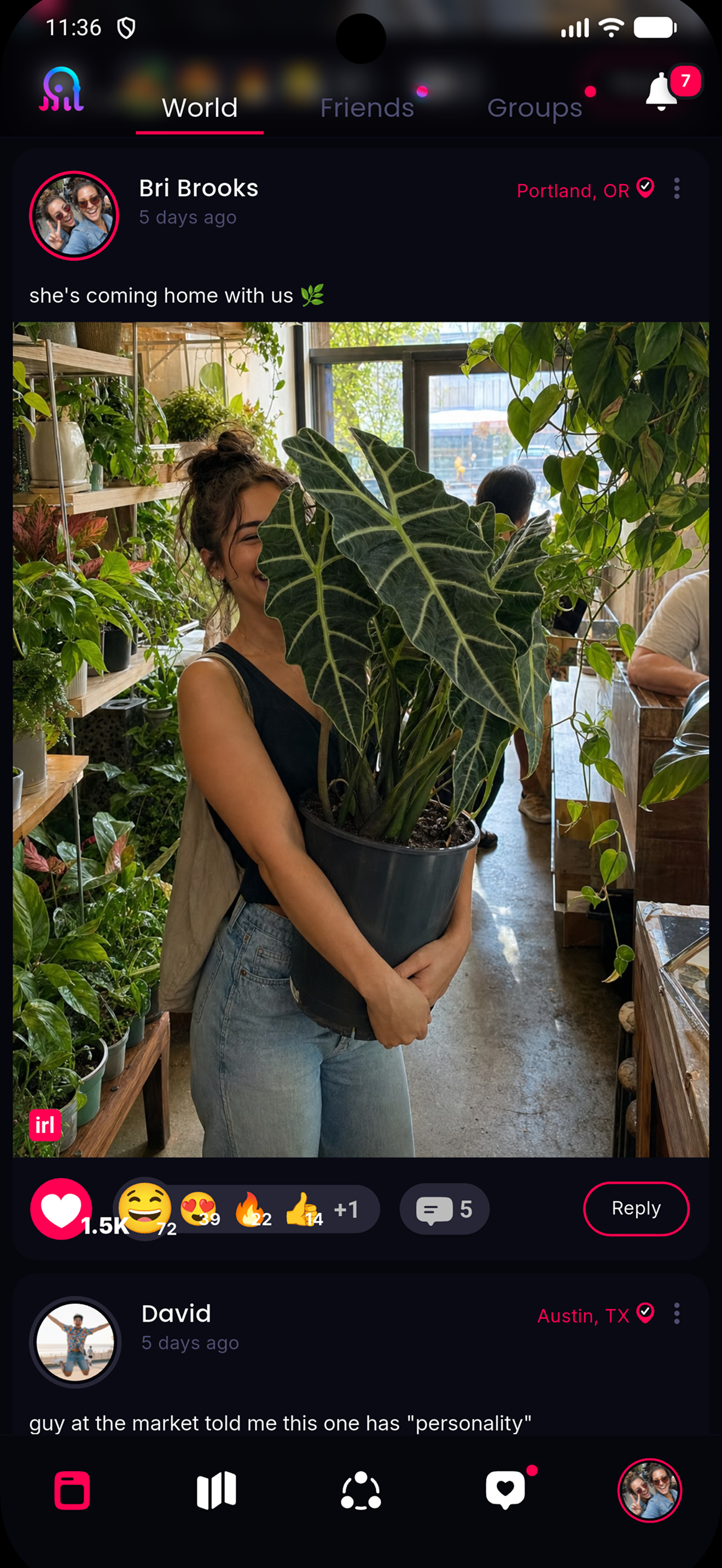
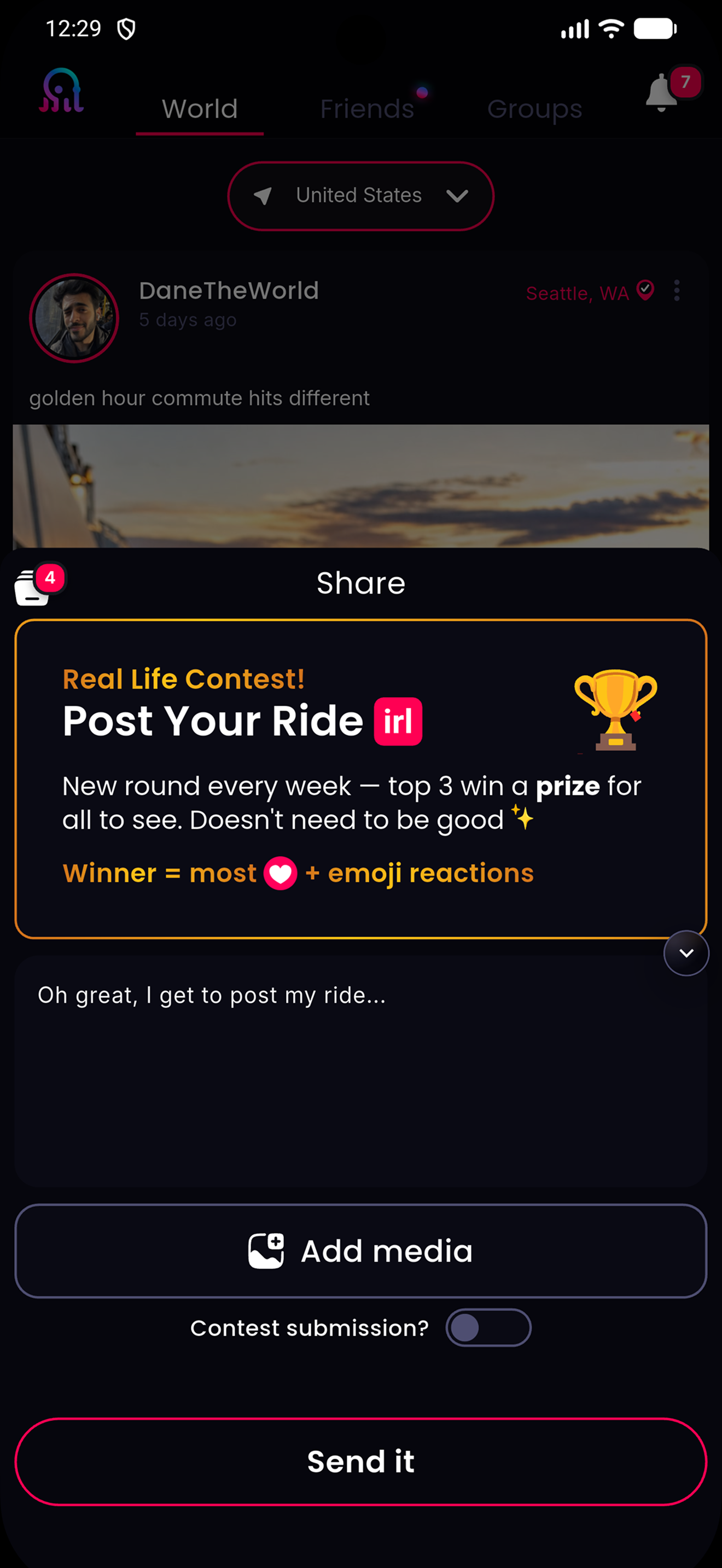
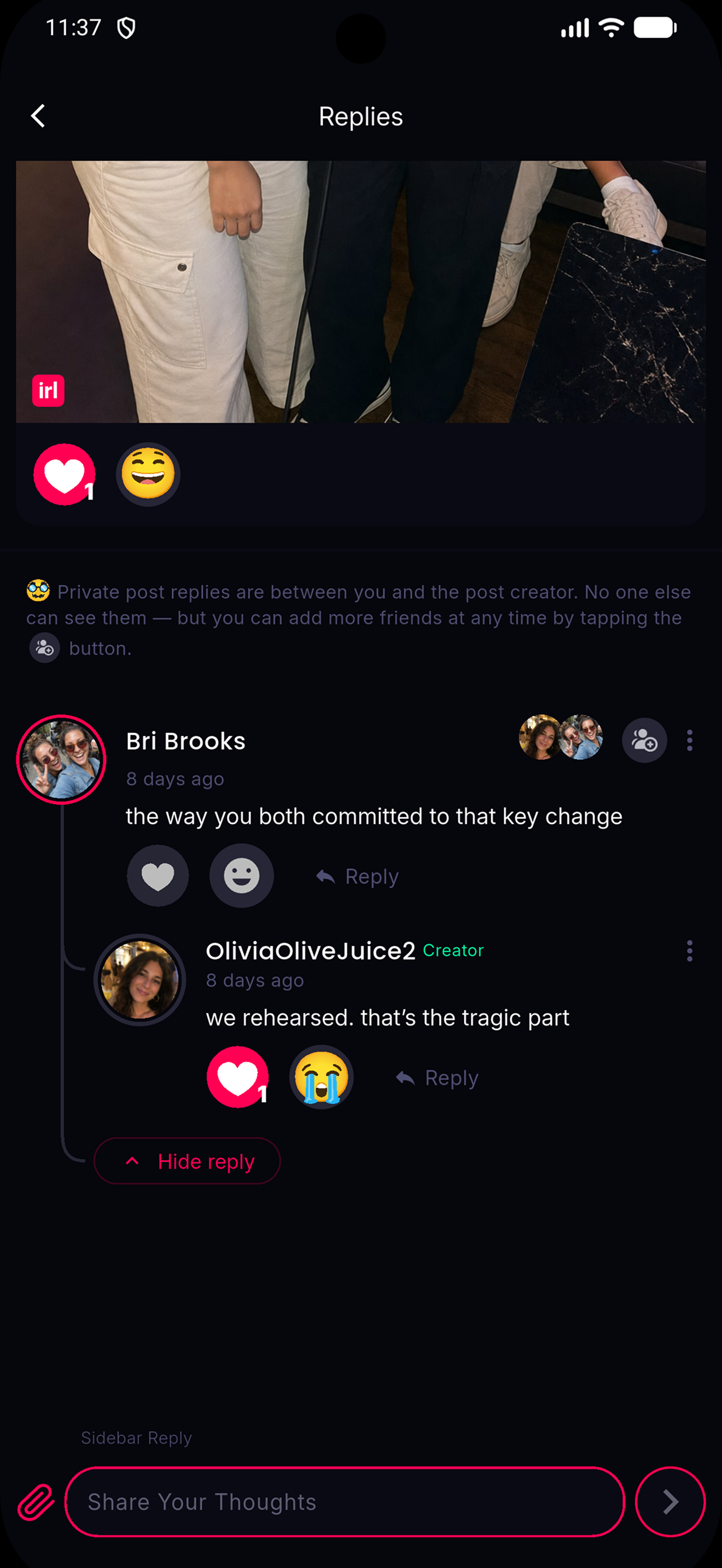
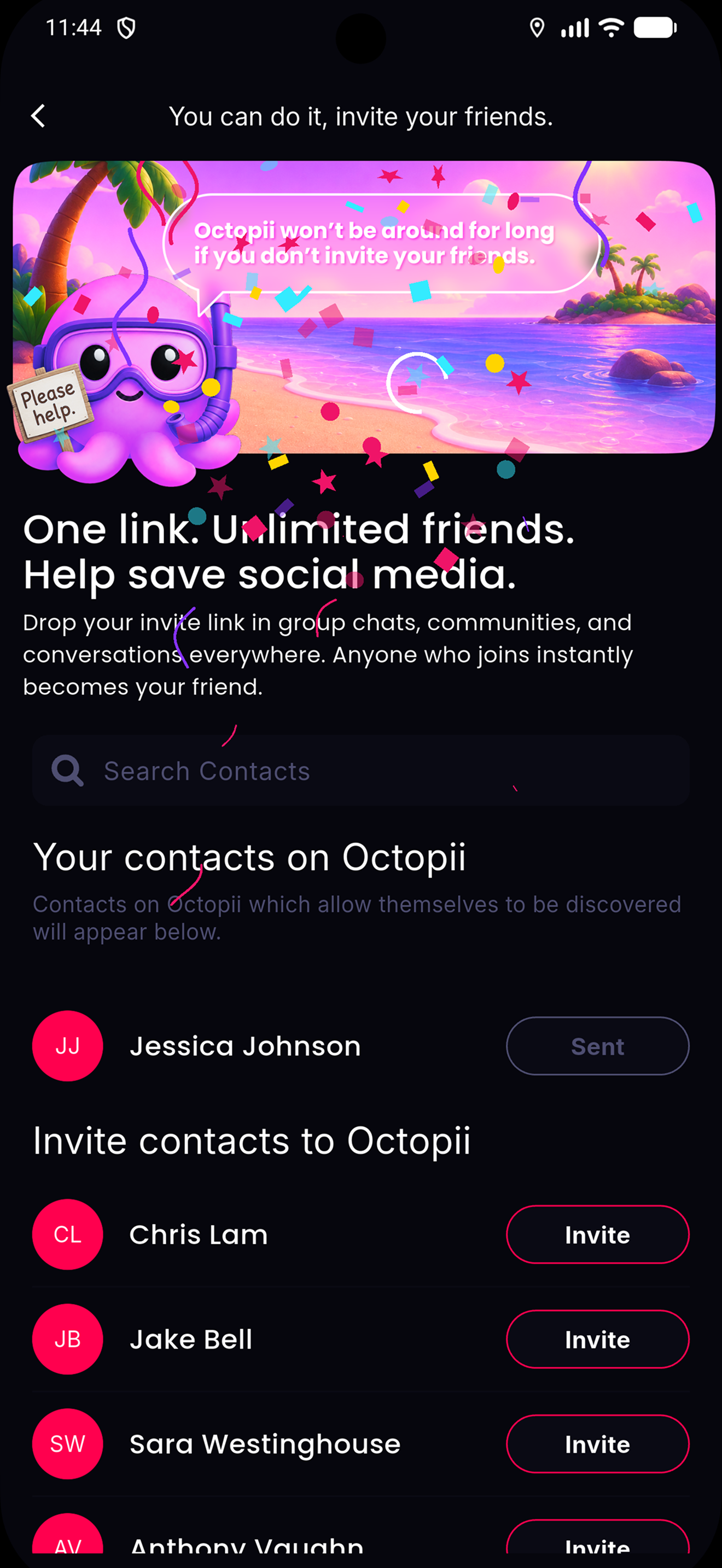
Above: Octopii Social v1.2 — We’re on v2.6 now; I was responsible for everything between the moment this video was captured and everything you see above in the screenshot carousel (and more!) — including the full-gamut P3 colorspace approach which led to more vibrancy than the TikTok app!)
Note: The video is accelerated for brevity.
Solving one of the world’s biggest problems
More than a decade has passed since we’ve begun acknowledging social media has its problems — from the pressure to perform and lack of authenticity, to bot accounts and fake content — there is no shortage of puzzles to solve in modern day social media.
A giant ambiguous puzzle the world has yet to solve? Just my cup of tea.
I founded and built Octopii LLC from the ground up — leading the creation of the Octopii Social platform, from jotting down the first notes all the way to launch day. I owned the product vision and strategy, UX/UI design, and end-to-end execution, contributing to virtually all functions including 500,000 lines of code, AI workflows, user research, product management, recruiting, and team leadership.
I conducted interviews, market research, and pored over surveys and studies from around the world to better understand the key challenges in modern social platforms, and translated those insights into world-first design solutions. Combined, those solutions comprise Octopii Social.
Utilizing AI to save our social lives
Octopii wasn’t intended to just be a revolutionary social app — it also had grand plans to utilize the power of an AI companion to assist in finding and maintaining friendships.
I’m sure we’ve all noticed a sharp decline in the number of posts we see from friends, and a large part of that is the introduction of short form video coupled with autoplay — most people are opening these apps to essentially channel surf, rather than make social connections. I felt, and still feel, a social companion aware of your digital social life, interests, personality, interwoven with all other users’ social lives, could teach us all how to be friends on the internet once again.
More about “Ollie”, Octopii’s “Social Sidekick”, is below. I will eventually share blueprints of how Ollie would work from a system design perspective. It’s a fascinating puzzle, and I thoroughly enjoyed the complexity of thinking it through.
Octopii isn’t perfect, yet.
As they say, software is never complete — well, in Octopii’s case, that could not be more true. I’ve cataloged over 50 improvements and fixes yet to be made to the UX/UI, which will be coming in the future. Virtually every aspect of Octopii’s current release, and indeed every other design touchpoint (web, stores, etc.) are the first few iterations.
Disclaimers aside, I am immensely proud of what I and the team accomplished, and it is my honor to have had the opportunity to give the world the gift of a social platform which returns us to our roots, free of all of the ailments of modern day social media. Give it a download, let’s save social media!
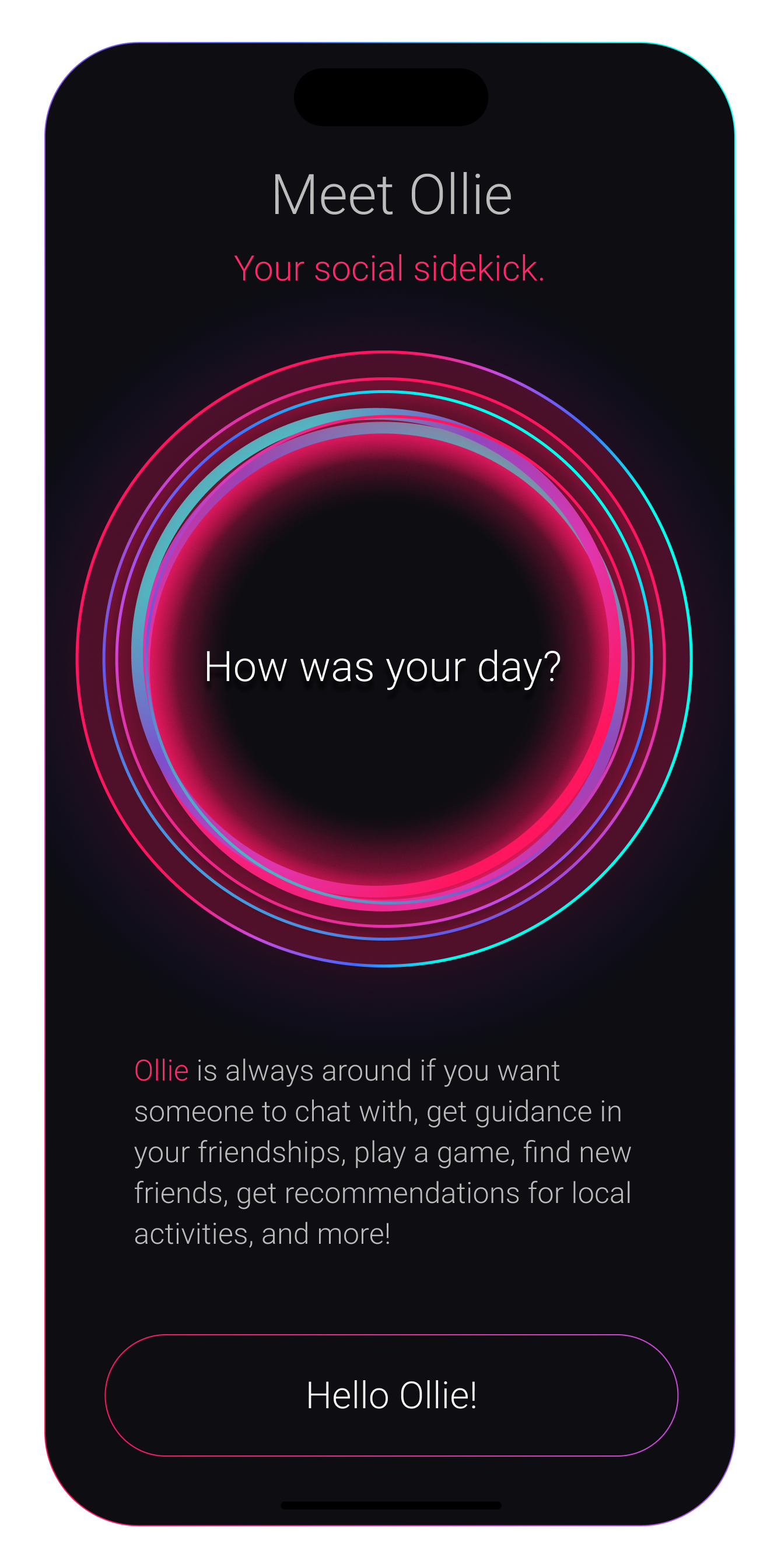
Octopii’s first-time launch animation.
Meet Ollie, your social sidekick!
Core to Octopii’s mission was a social companion — Ollie. Octopii didn’t receive the investment or traction necessary to launch Ollie, but it is a concept which I hope to see released by someone else someday. (I’m sure it’s not far away.)
Ollie was to be a friend in every user’s pocket, checking in when it makes sense — asking how their day is going, offering support, encouragement, and understanding, while also suggesting new friends and activities based on their location, interactions, personality, and interests.
Ollie would facilitate the cultivation of new relationships with double opt-in friend suggestions, both local and afar, initiating get-to-know-you games, and offering pro-social engagement loops. The same dynamics would apply to pre-existing relationships, suggesting virtual and physical activities, relationship nudges, auto-scheduling, gifting of virtual goods, and ultimately, elevating our relationships in ways we never anticipated.
Octopii’s Logo
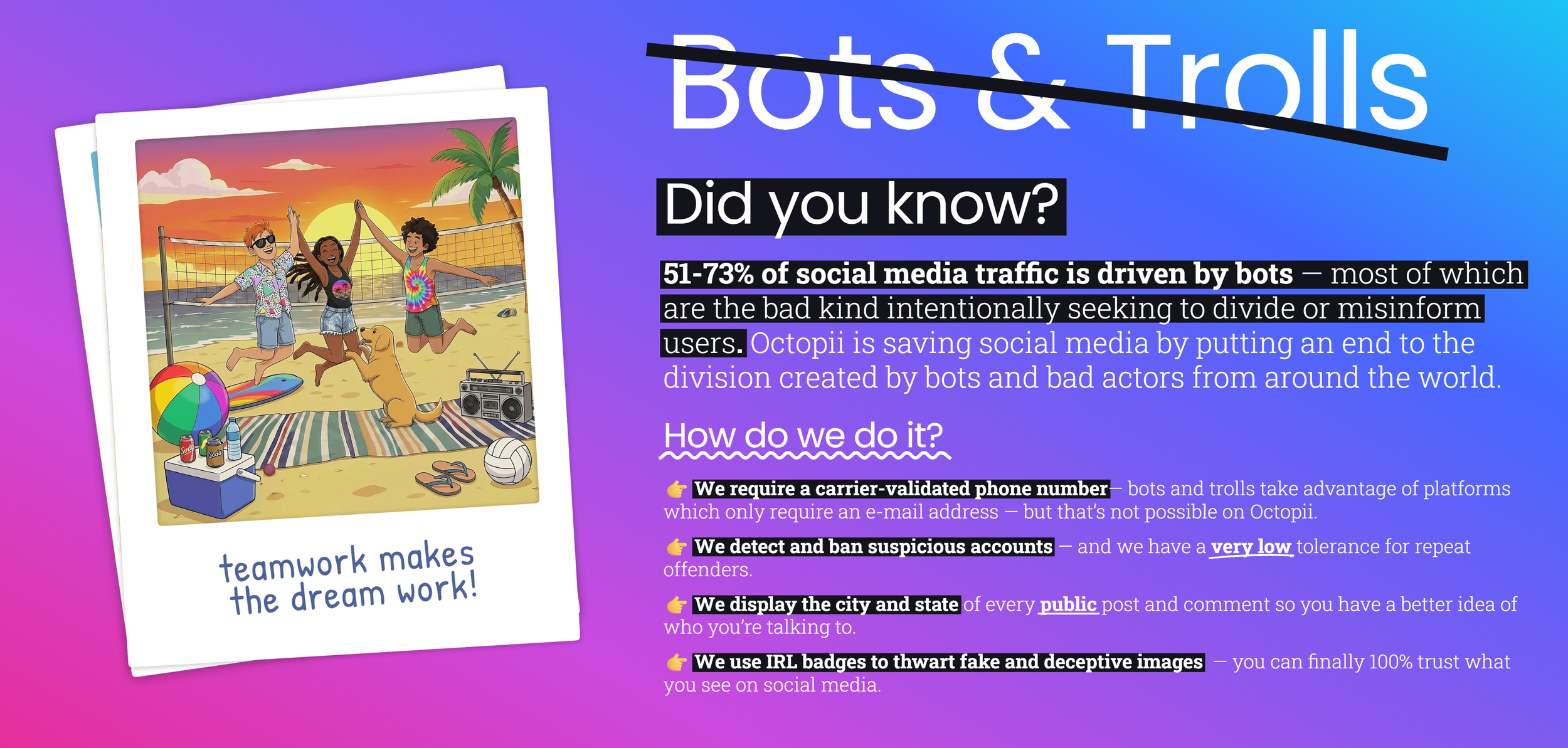
Below are the various gradients I authored for the Octopii logo. I conducted quite a bit of user research on this — I wanted Octopii to be unique and standout from the crowd of competitors. It came down to Beach Sunset and Cotton Candy — younger respondents preferred Beach Sunset, while adults generally preferred Cotton Candy. I really liked them both, but agreed the visual harmony and aquatic vibes of Cotton Candy was the best option.
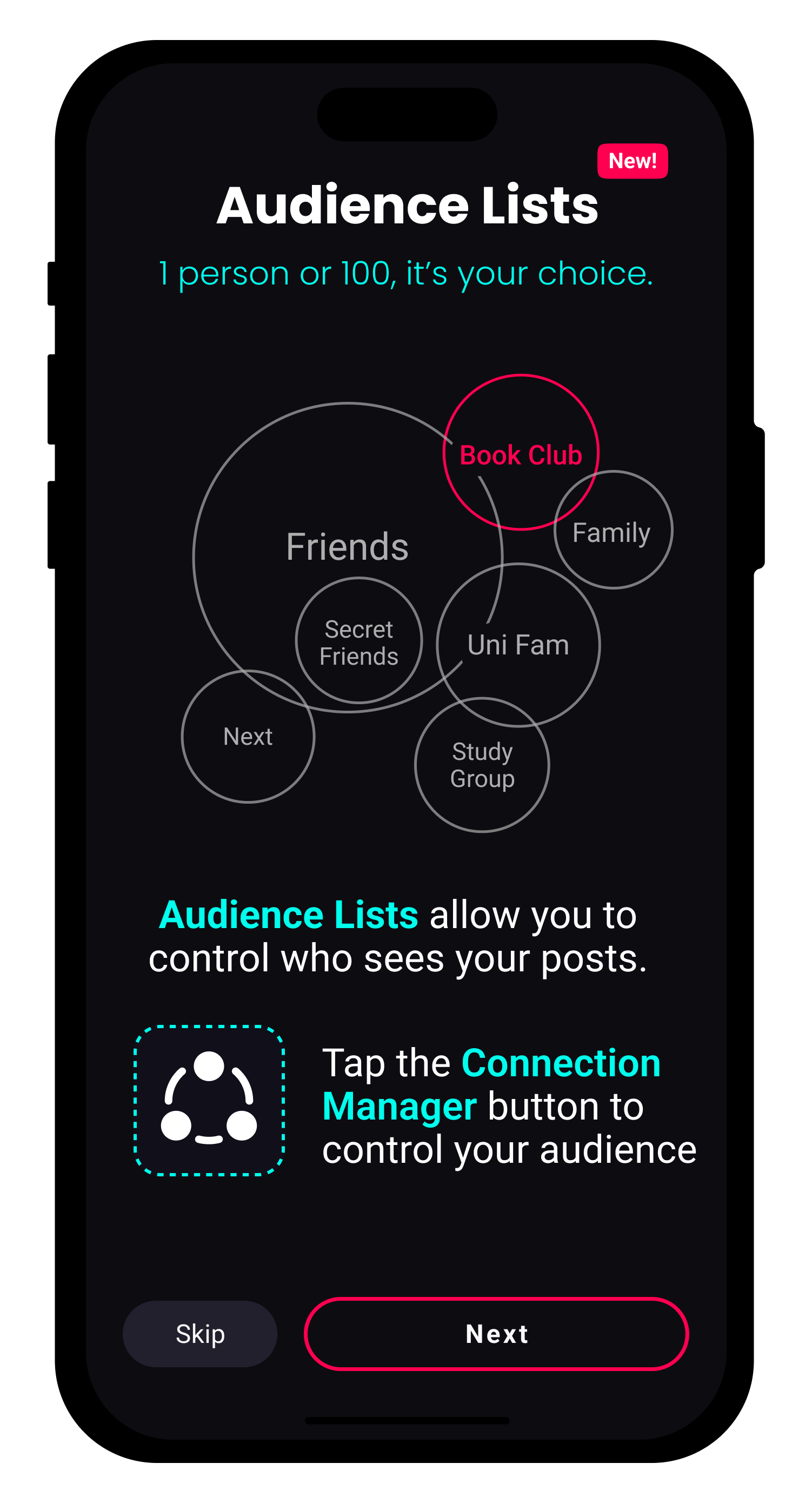
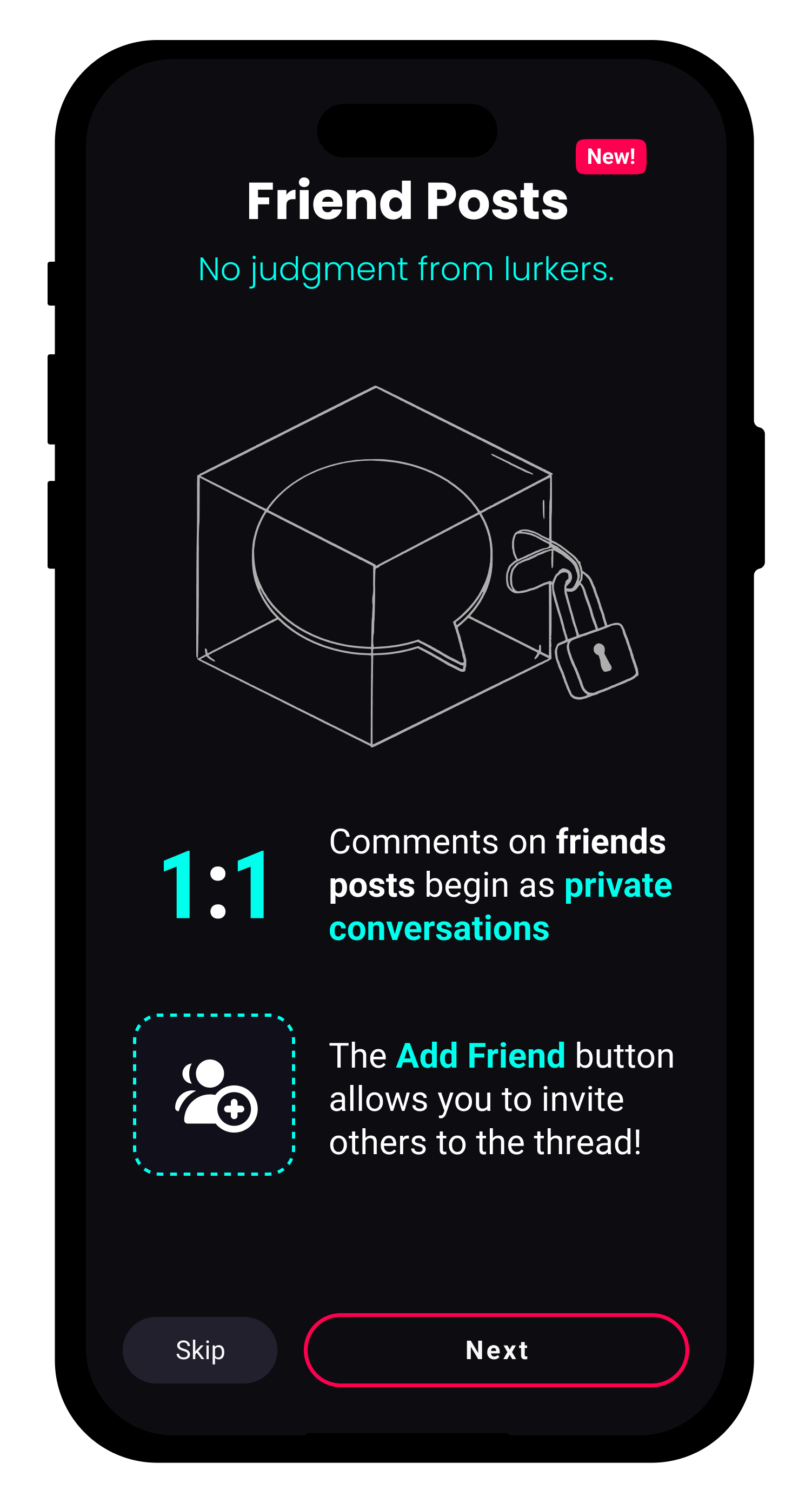
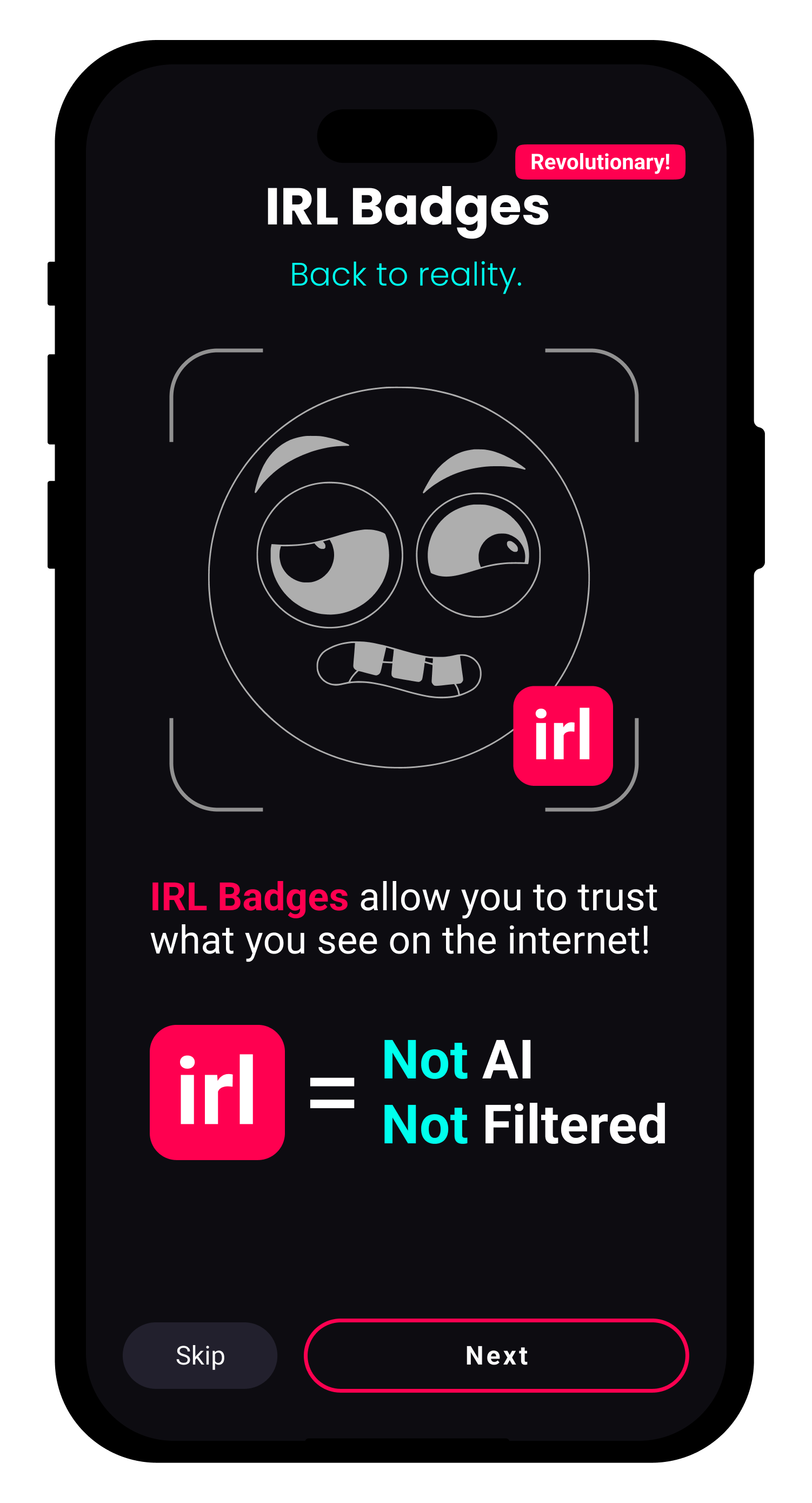
Octopii’s Onboarding
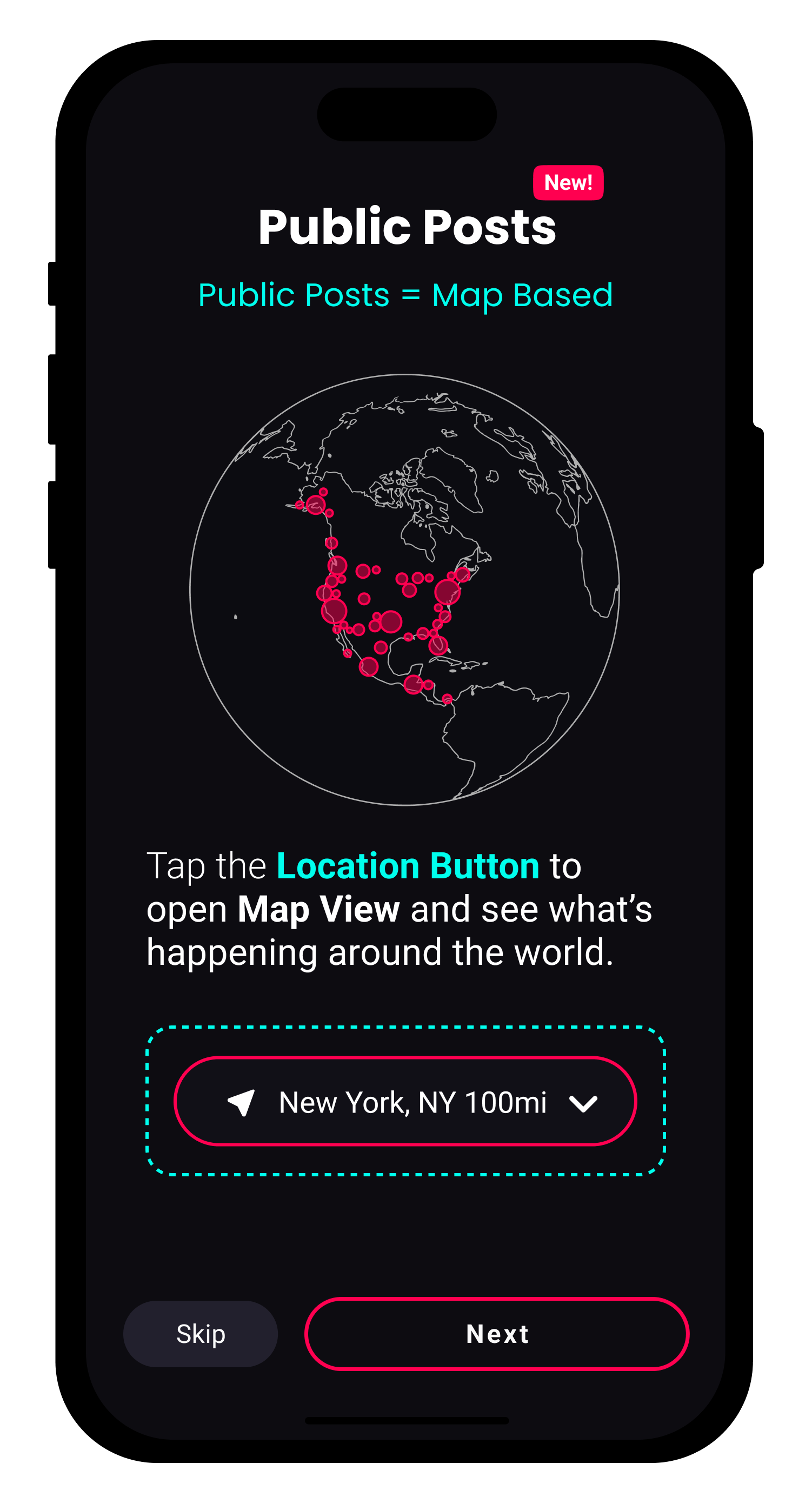
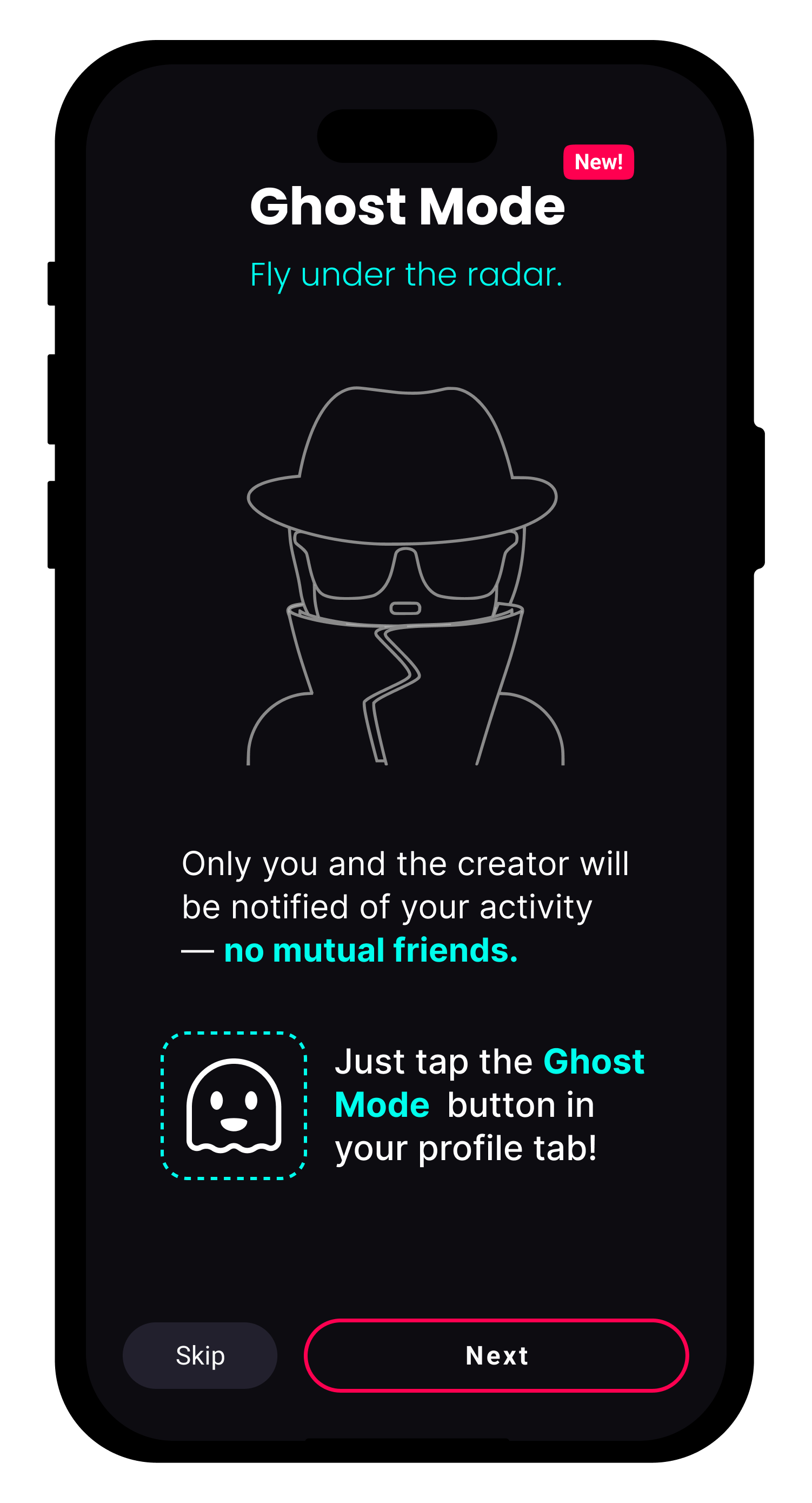
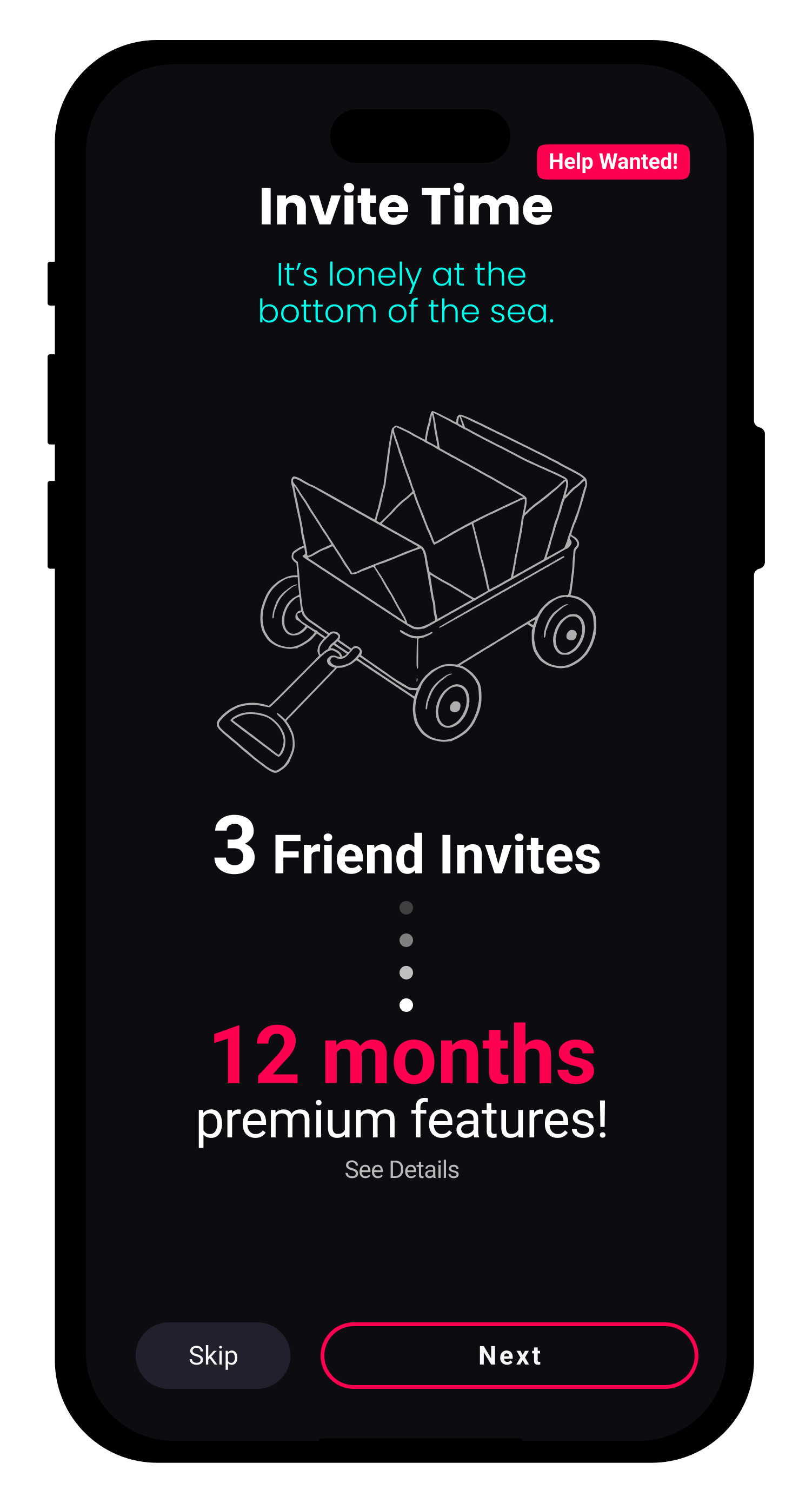
Below are the onboarding screens I authored for v1 of Octopii Social — I wish I had more time to work on these, they’re just about the bare minimum I could get away with while handling all other responsibilities, i.e. Coding, Leadership, UI/UX, Recruiting, Outreach, Marketing, Community Management — you name it, I did it.
Octopii’s Homepage — A little 90’s Nostalgia
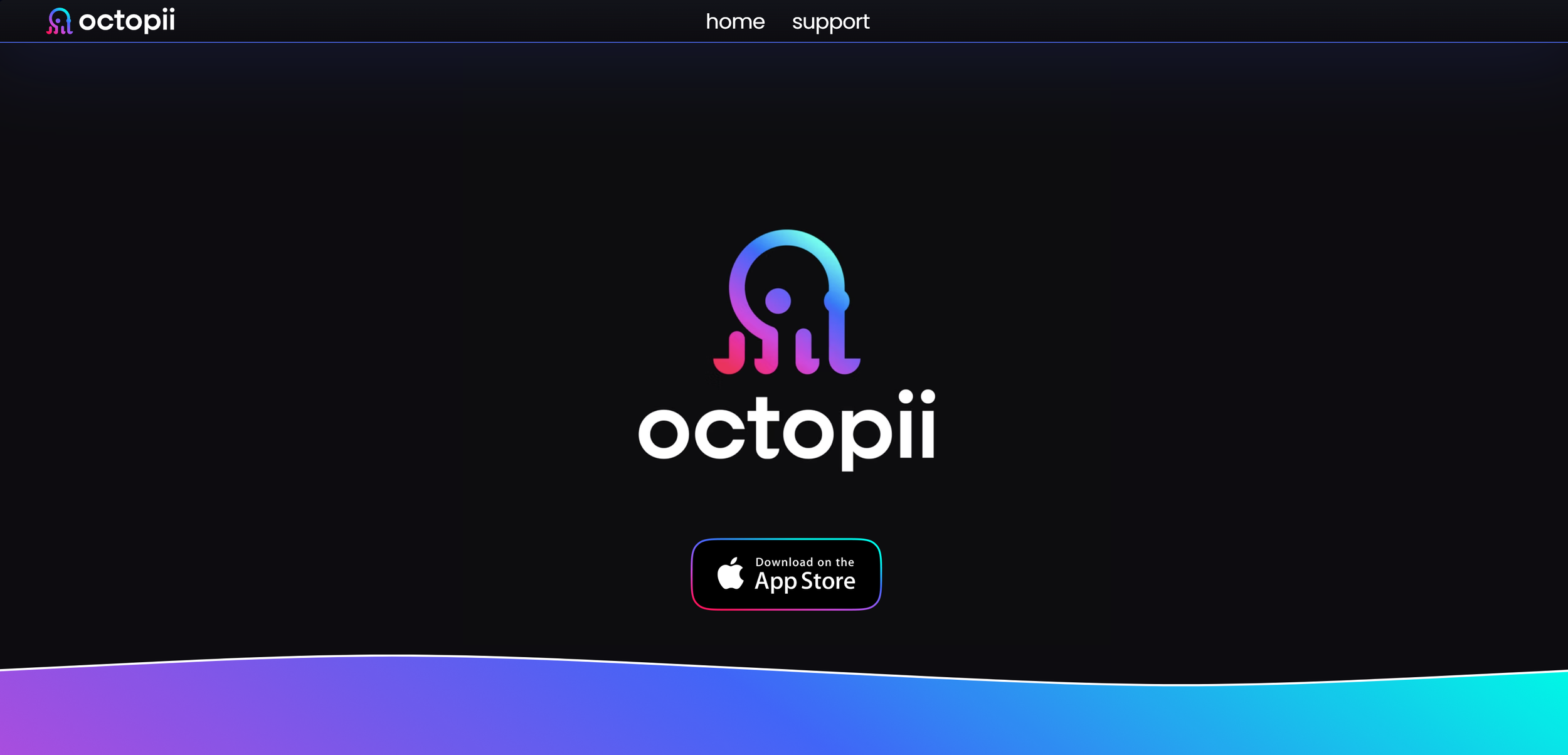
Below is the homepage I created for Octopii Social — the targeted audience was largely Gen Z and Millennials; I endeavored to tap into 90’s nostalgia, something I think we’re all feeling on some level. Once again, I was responsible for all elements, from top to bottom, I authored every last detail of the Octopii homepage.
As is the case with all design responsibilities for Octopii, I wish I had more time to dial it in and experiment beyond the first few iterations, which is why I’m now searching for a dedicated role as a designer (and as much opportunity to utilize my engineering abilities as possible!)
Octopii’s v.01 App Map
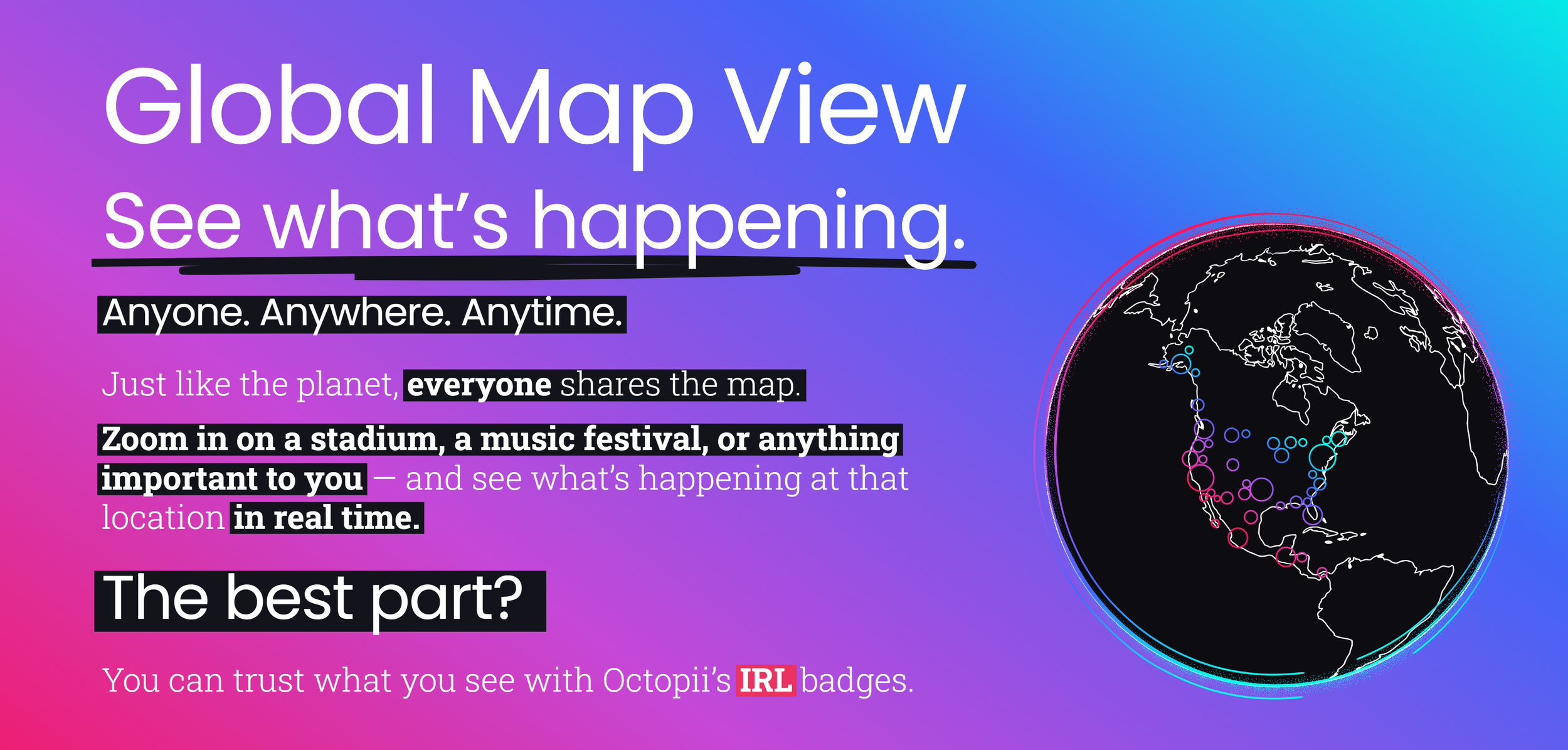
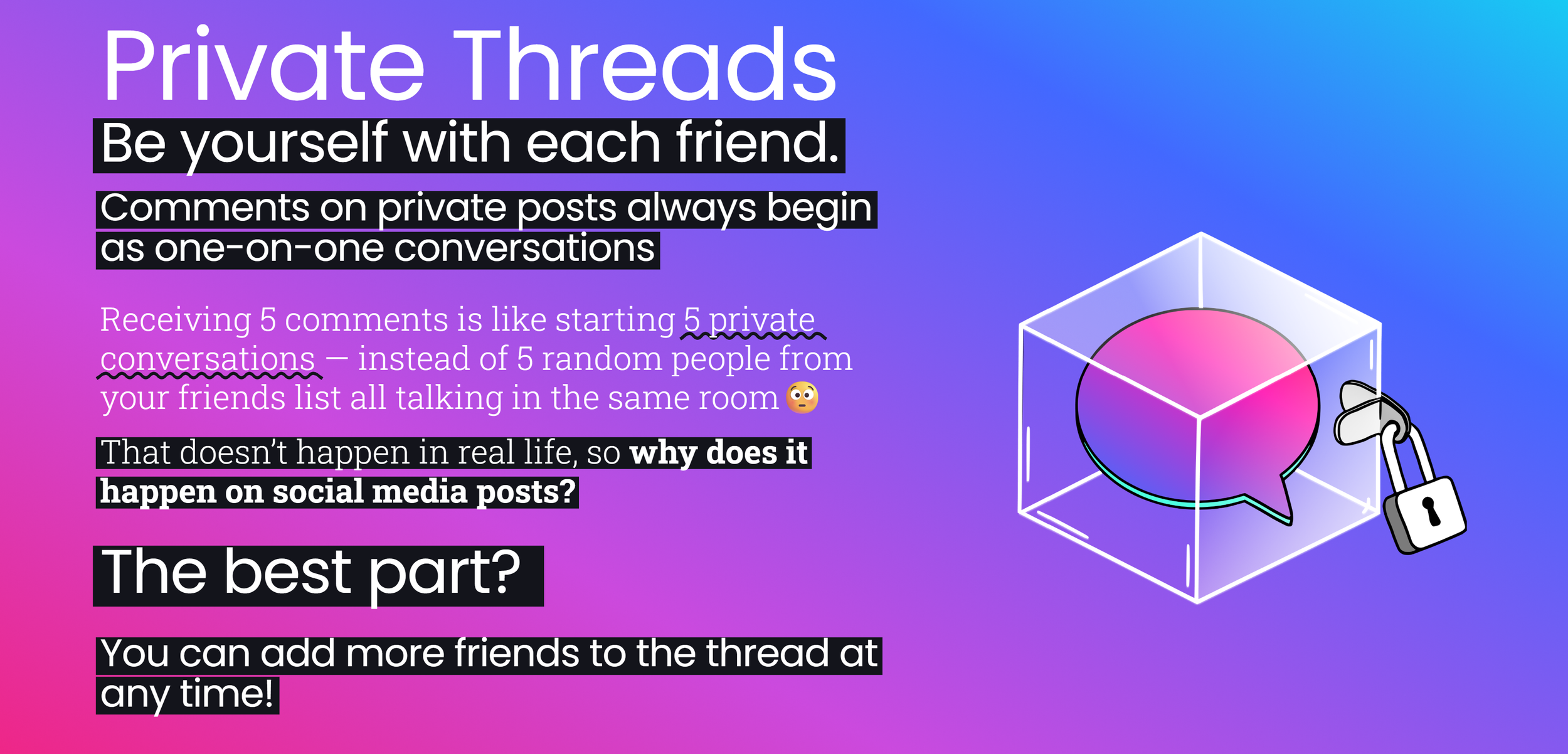
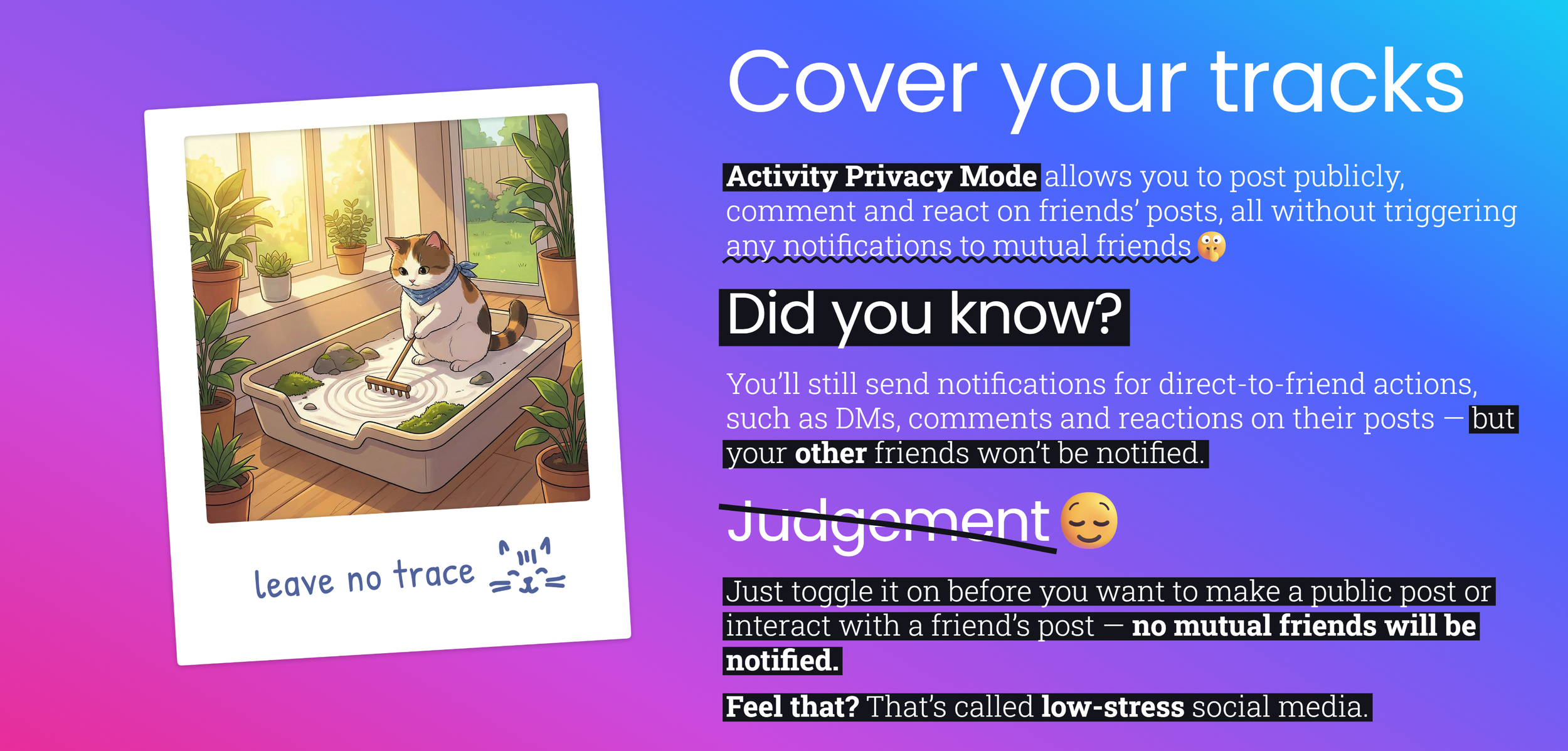
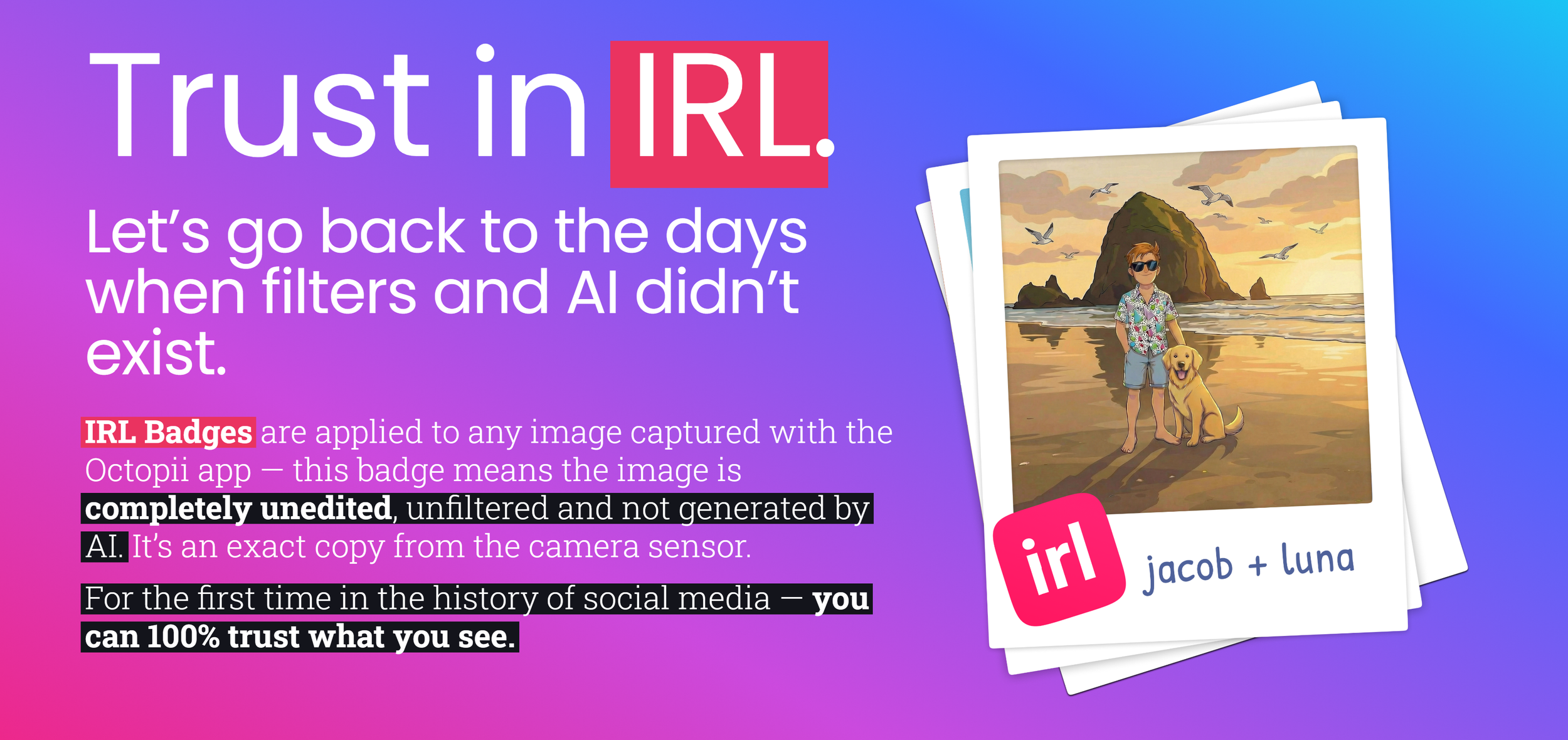
Below is my initial App Map wireframe for Octopii Social, and boy does it bring back memories! So many aspects never made it to development, but that is the nature of the journey between Figma and the App Store. Concessions were made due to all manner of constraints. In the same vein, my initial design didn’t even have a public feed or map view, which is a massive part of the UX of Octopii Social 1.0.
Full App Map — Definintely a bit crowded at the bottom!
Sign-up / Sign-in / Onboarding
Community Management
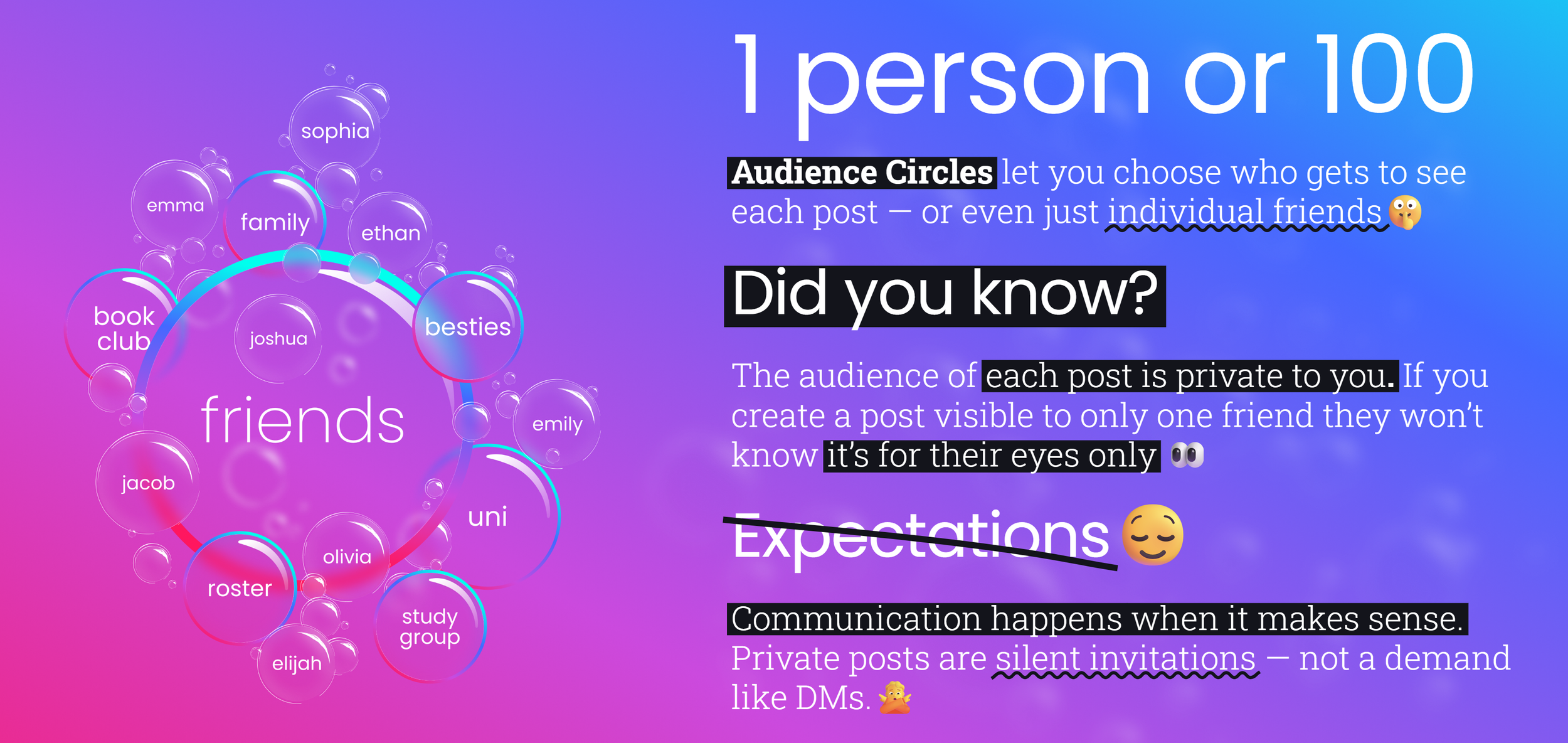
Audience Circles & Friend Invites
Microsoft — AR Copilot Superagent
Most of my work at Microsoft is not shareable (military contract), but I did work on an AR version of Copilot which is very much shareable. Below is my rendition of the voice-controlled Copilot experience. My goal was to create a series of vignettes — “A day with Copilot” — I was able to write personality pre-prompts, fine-tune Speech Synthesiss Markup Language (SSML) to extract as much personality as possible, create and animate all 2D and 3D elements, and eventually went on to produce a 6-dimension prediction model framework for the optimal AR Copilot assistant.
The AR Copilot assistant would intake 6 different sensor datatypes available in the Hololens, identifying patterns and co-patterns with a high confidence rating to ultimately produce an action (or, often, inaction). To identify these patterns, each of the 6 datatypes would be ingested by individual prediction algorithms (presumably gradient descent), trained and reinforced by user feedback, and ultimately generate a unique-to-the-user weighting pattern, resulting in the most lifelike, intelligent, and situationally aware personal assistant to ever be created — hopefully. I won’t go into the entire breakdown of every sensor type here; below is an example of what we may learn from just audio patterns. This is truly just scratching the surface — head on over to the AI & Data Science page for more detail.
Audio
Speaker ID — Who said what?
e.g. Which meeting attendees should receive an automated follow-up meeting invite?
Social Dynamics — What did they mean?
Sentiment Analysis — Was that sarcasm? e.g. “Ship it!” (Opportunity for Autism Spectrum Disorder assistance)
Conversation State — Is this a good time to surface suggestions?
Environmental — What’s competing with the UX? How does the environment affect assistant behavior?
Loud venue — Increase volume
Quiet space — Decrease volume, perhaps tonality (i.e. “hushed voice”)
Venue: Airport — Smart-pause during announcements (Copilot accessing airport’s API)
I had a ton of fun prototyping this experience; it drew upon virtually every possible design discipline, and more. I was responsible for every bit of its construction, from beginning to end.
Software: Figma, Unity, After Effects, Microsoft Speech Studio, Audacity, 3Ds Max, Photoshop
Copilot Superagent — In this example, utilizing time, GPS, user patterns, and spatial data to anticipate user needs, solve problems, provide situational awareness, and surface solutions at time-of-need.
Copilot Superagent — Utilizing app-context-sensitivity to interpret voice commands, edit documents, and connect the user with colleagues when they become available.
A quick visual / motion exploration for the Copilot Superagent.
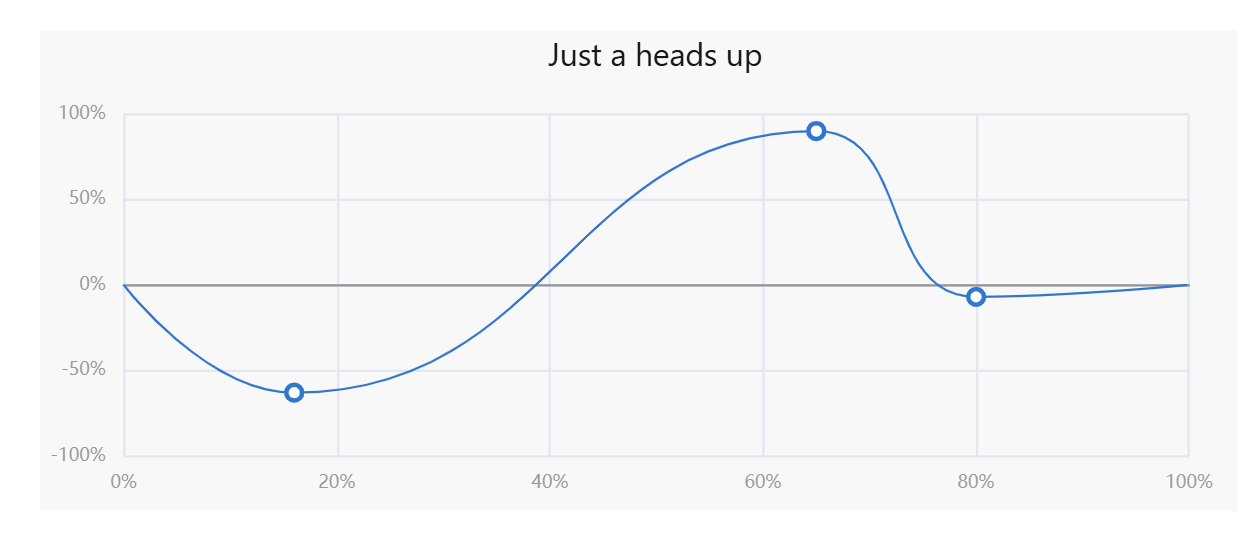
One of many intonation curves I dialed in to produce the personality of Copilot.
Pluto VR — iOS Digital Human Generator
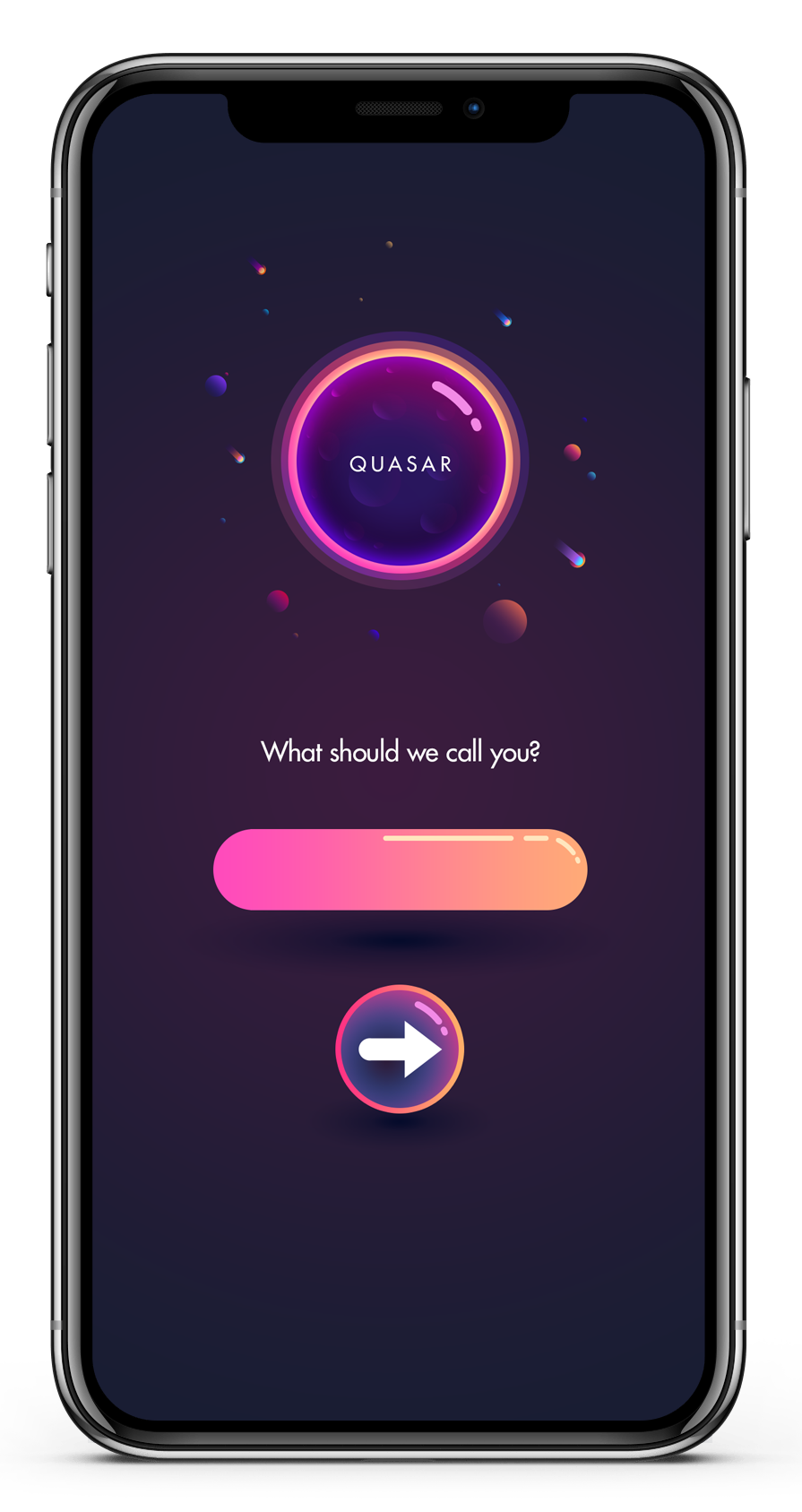
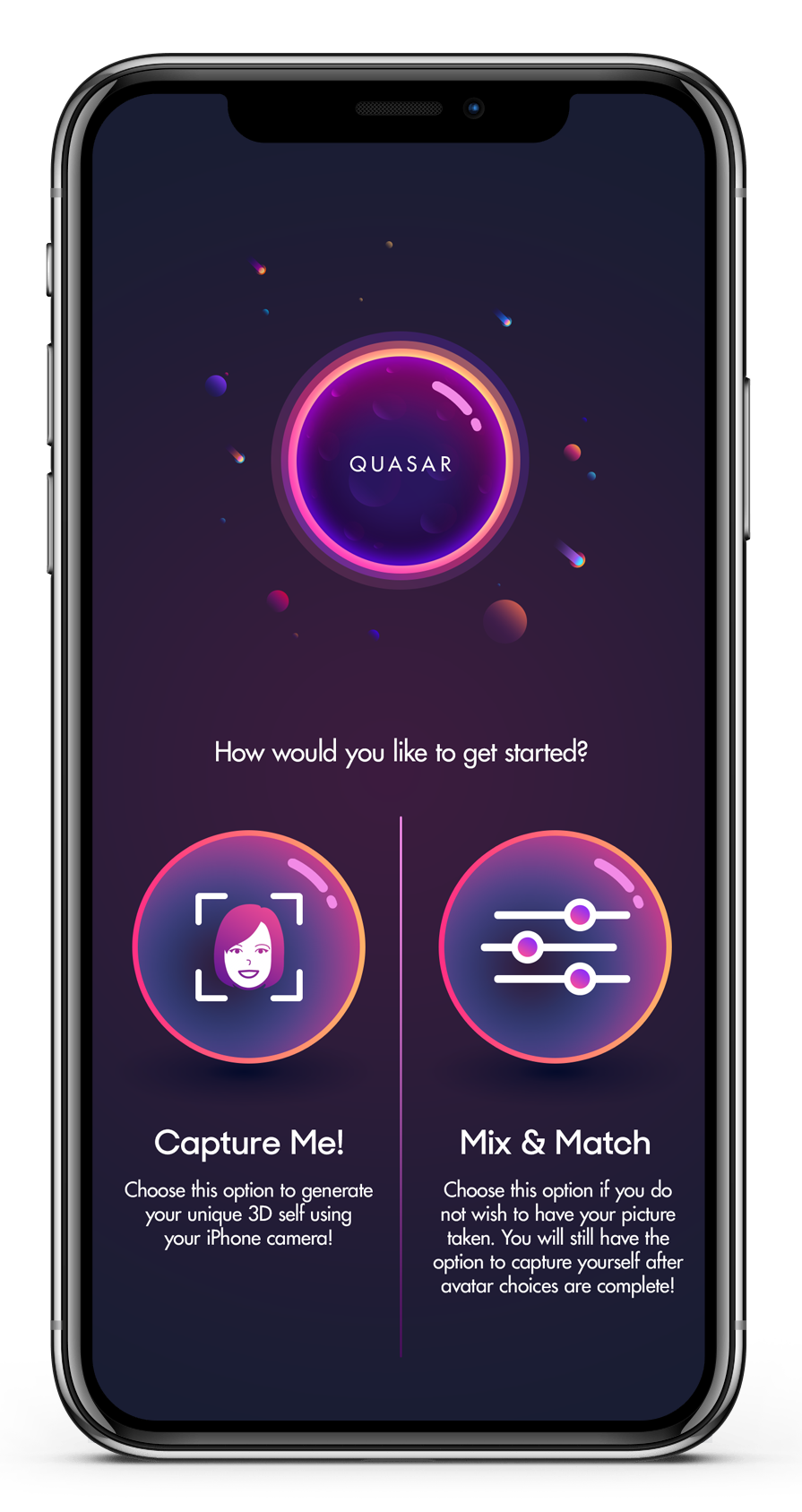
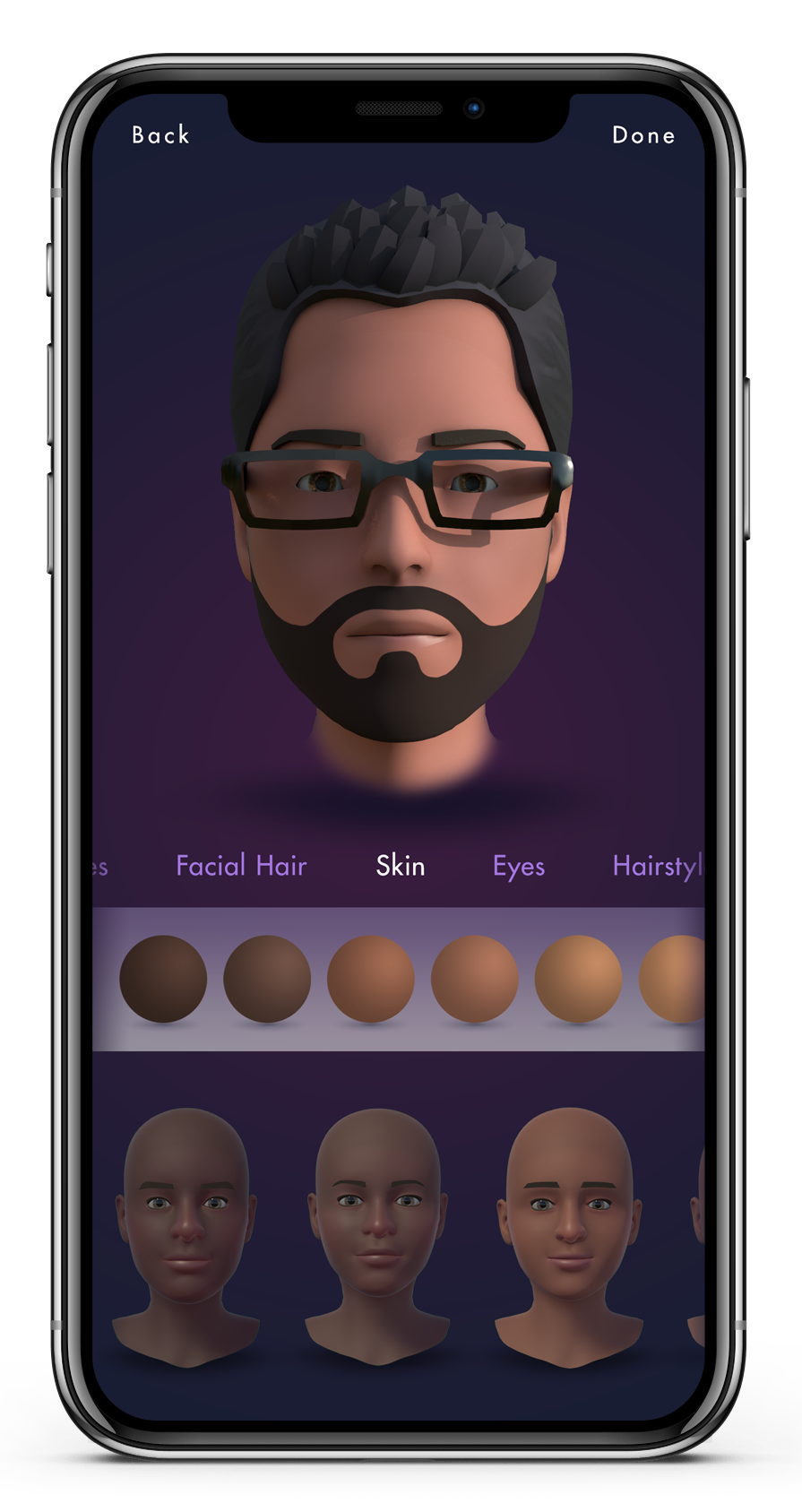
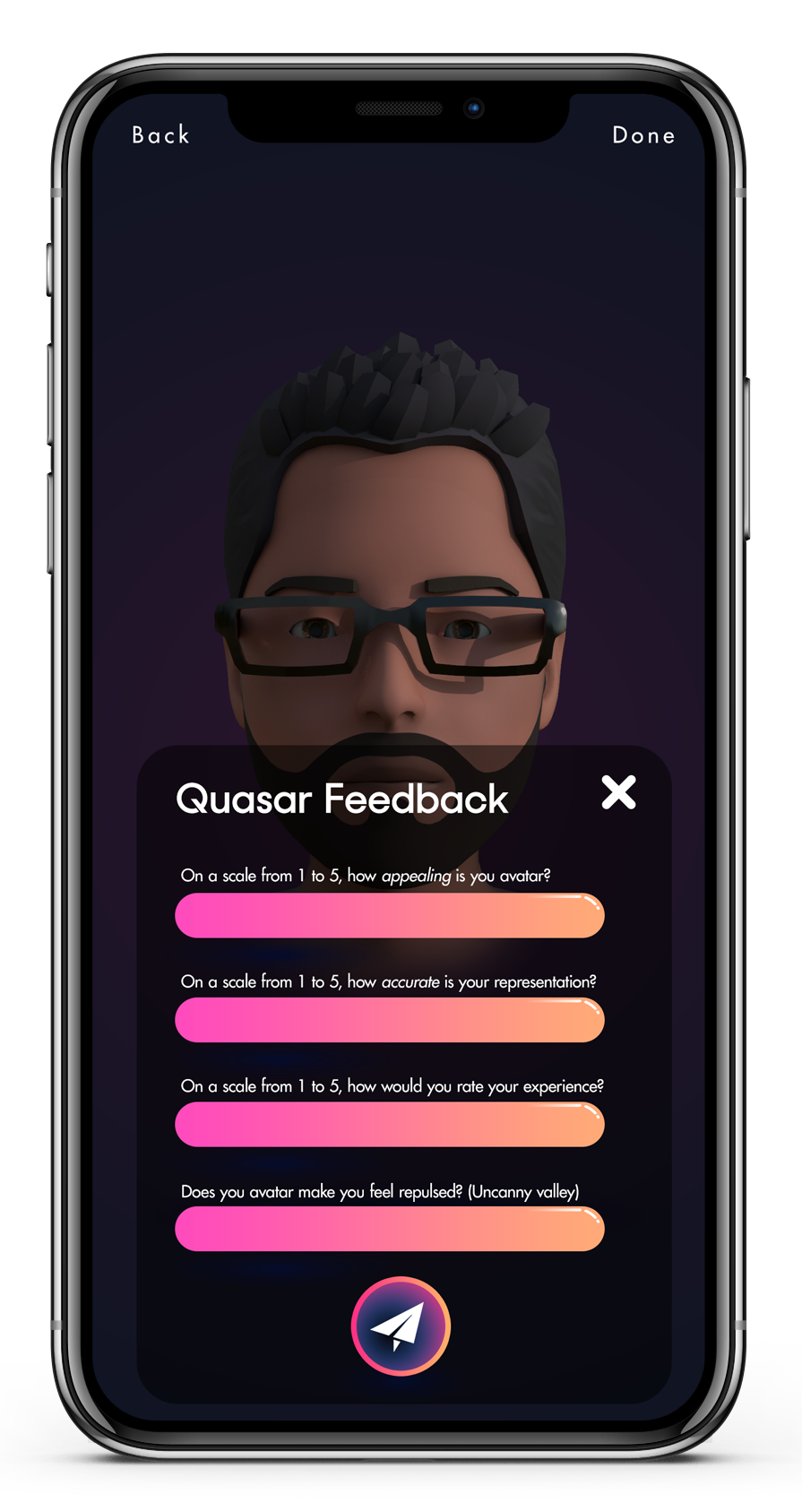
My work at Pluto VR was almost entirely centered around developing a cutting-edge procedural avatar generator for iOS which captures the user’s appearance and outputs a unique-to-user virtual representation. Please feel free to read my shockingly long breakdown of the entire project, here.


Better Policing with A.I.
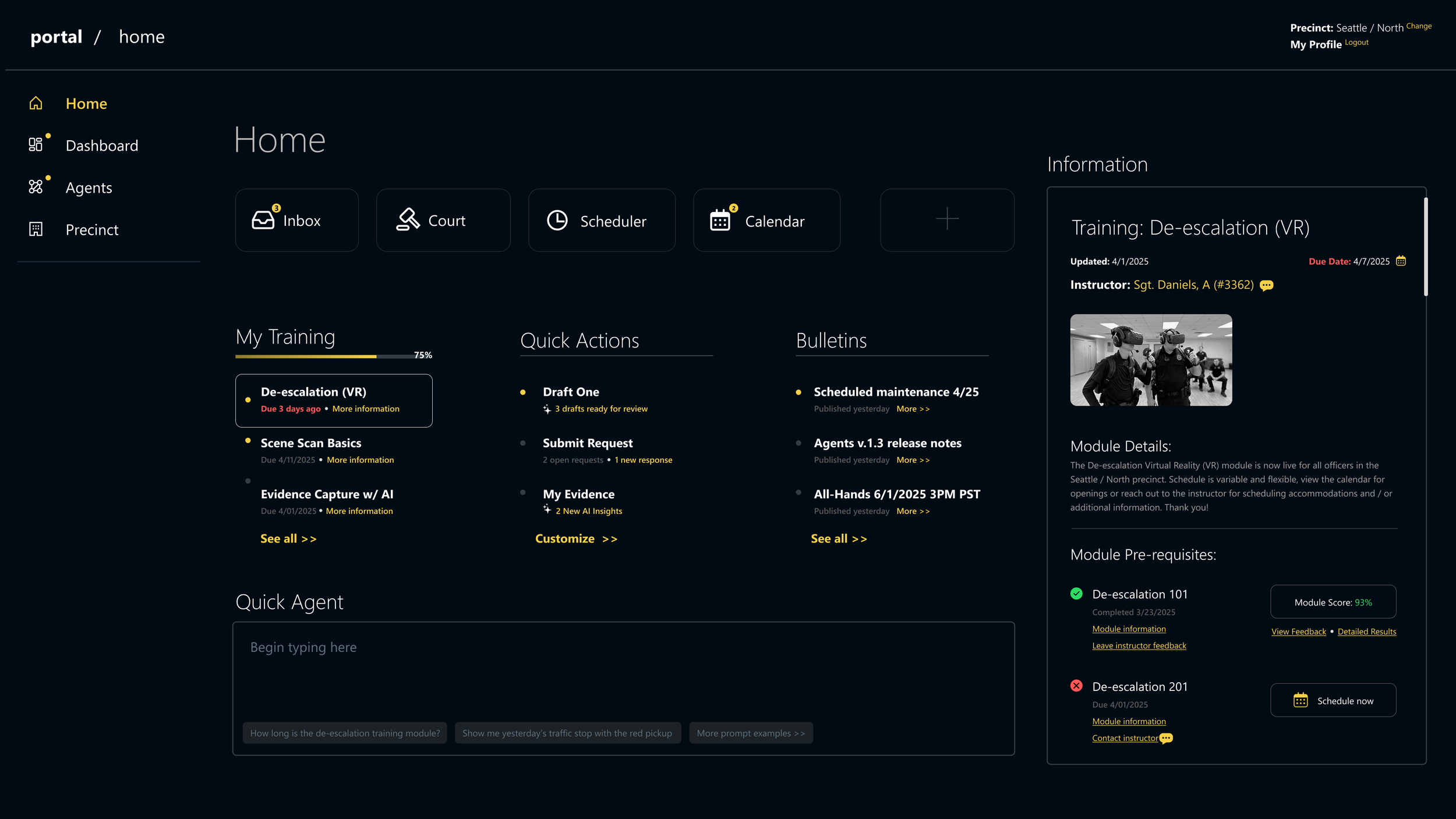
The below law enforcement portal design was created in pursuit of a role. It includes the integration of a series of AI agents to aid the law enforcement process at every stage. Each user would be assigned a personal agent which collects day-to-day information, be it at the desk or in the field. This personal agent would interface with other personal agents to exchange information, complete tasks, find loose ends, and ensure standards and procedures are followed. Ultimately a superagent dashboard would be available to an AI systems admin to track the health (and spend) of the AI agents.
Tap or click for full-size